
Clean your dishwasher without vinegar using baking soda, citric acid, and hot water.
I’ve cleaned dozens of dishwashers and tested vinegar-free methods that work well. This guide shows clear steps on how to clean dishwasher without vinegar. You will learn safe alternatives, step-by-step routines, and tips to keep odors, buildup, and clogs away. Read on for simple, proven ways to keep your machine fresh and efficient.
/how-to-clean-the-dishwasher-1900465_07-6452d6083d11478497770f43bfd83258.jpg)
Why clean dishwasher without vinegar?
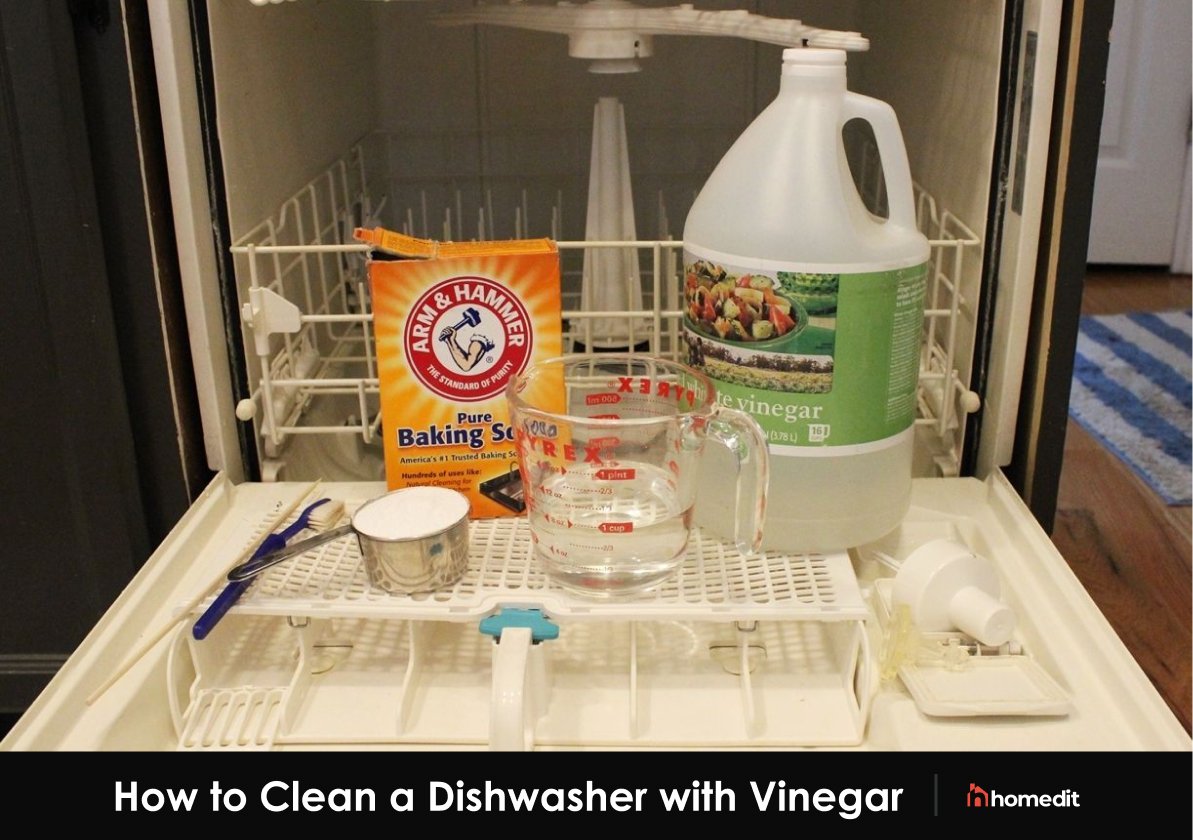
Some people avoid vinegar because of smell, surface damage concerns, or metal corrosion worries. If you want to clean dishwasher without vinegar, there are safe, effective choices. I use mild acids like citric acid and gentle abrasives like baking soda to get results. These options clean, deodorize, and protect parts while staying safe for seals and finishes.

Safe, effective alternatives to vinegar
Baking soda
- Use as a mild scrub and deodorizer. Sprinkle a cup on the bottom before a hot rinse cycle.
Citric acid
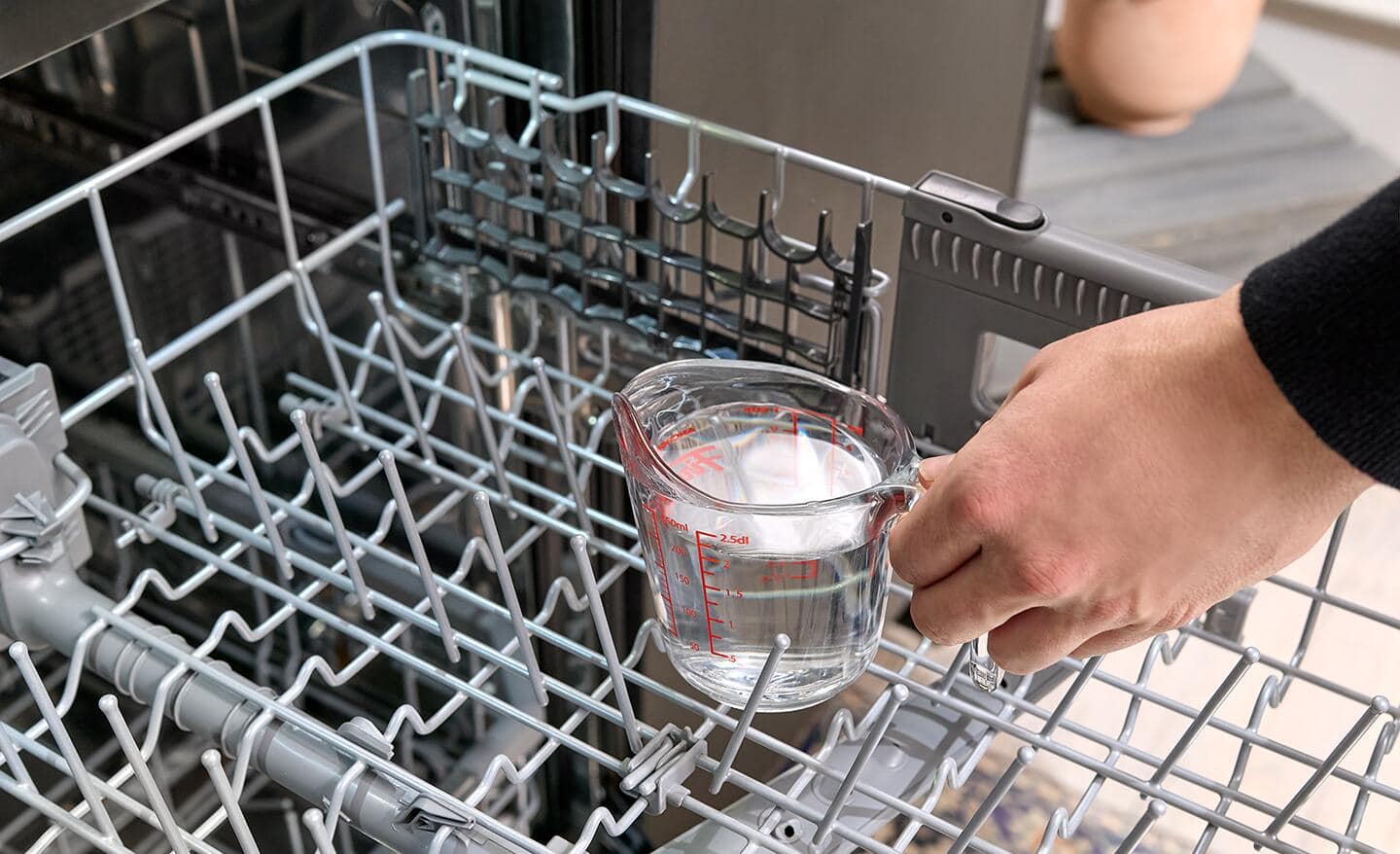
- Dissolve 1–2 tablespoons in a cup of hot water. Run on an empty cycle to remove hard water scale.
Lemon juice
- Fresh lemon juice works like citric acid for light scale and smells fresh. Use sparingly.
Dishwasher cleaner tablets or powders
- Designed for machine use. Follow the package for best results.
Hydrogen peroxide
- Use 3% hydrogen peroxide as a sanitizing rinse in small amounts. Do not mix with bleach.
Bleach (use with caution)
- Use only for white, non-metal parts and when manufacturer allows. Never mix bleach with acids or ammonia.
Hot water and longer wash cycles
- Running the hottest, longest cycle helps dissolve grease and food. Combine with baking soda or citric acid for best effect.
Step-by-step: Regular clean (weekly or every 2 weeks)
Follow these simple steps to clean dishwasher without vinegar on a routine basis.
-
- Remove and rinse dishes. Make sure the machine is empty.
-
- Check and empty the filter. Rinse under hot water to remove food bits.
-
- Add 1 cup baking soda to the bottom. Do not block the drain.
-
- Run a short hot water cycle. Baking soda will deodorize and lift grime.
-
- Wipe door seals and edges with warm soapy water. Use a soft cloth or sponge.
Repeat every 1–2 weeks to prevent odors and light scale buildup. These small steps keep your machine running well.

Deep clean: filter, spray arms, and seals
For deeper cleaning, schedule a monthly or quarterly session to clean parts manually.
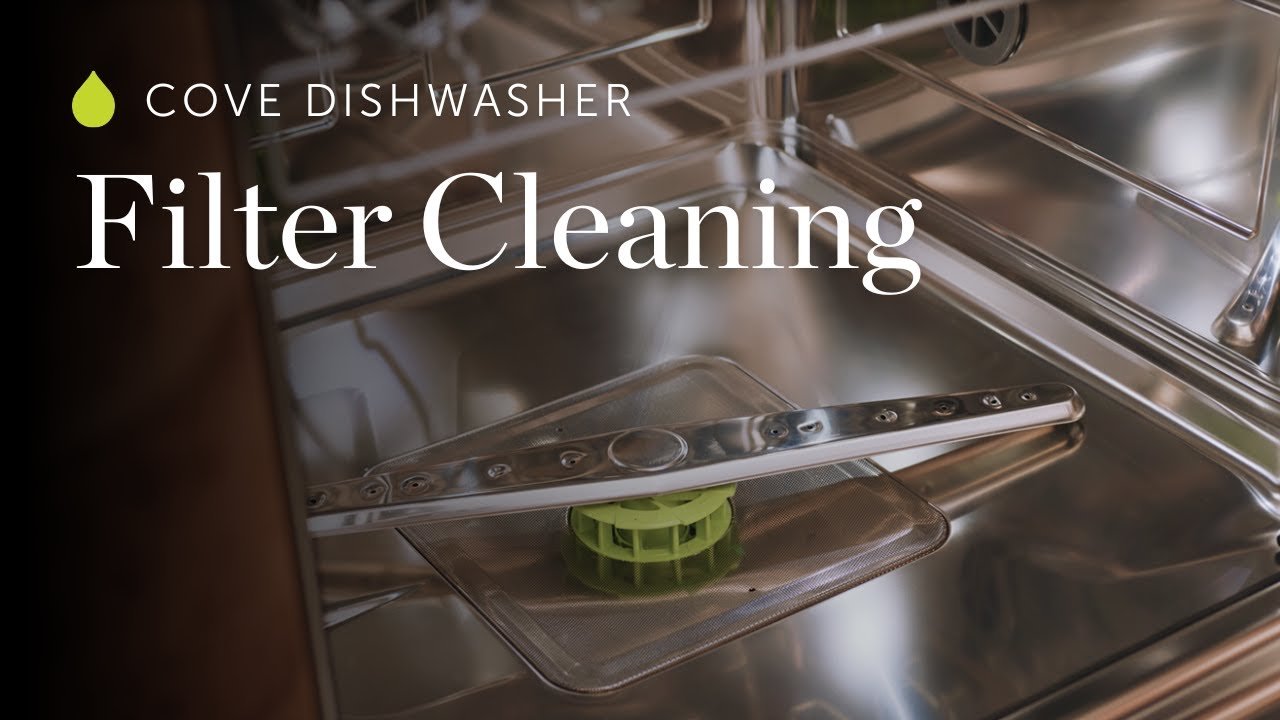
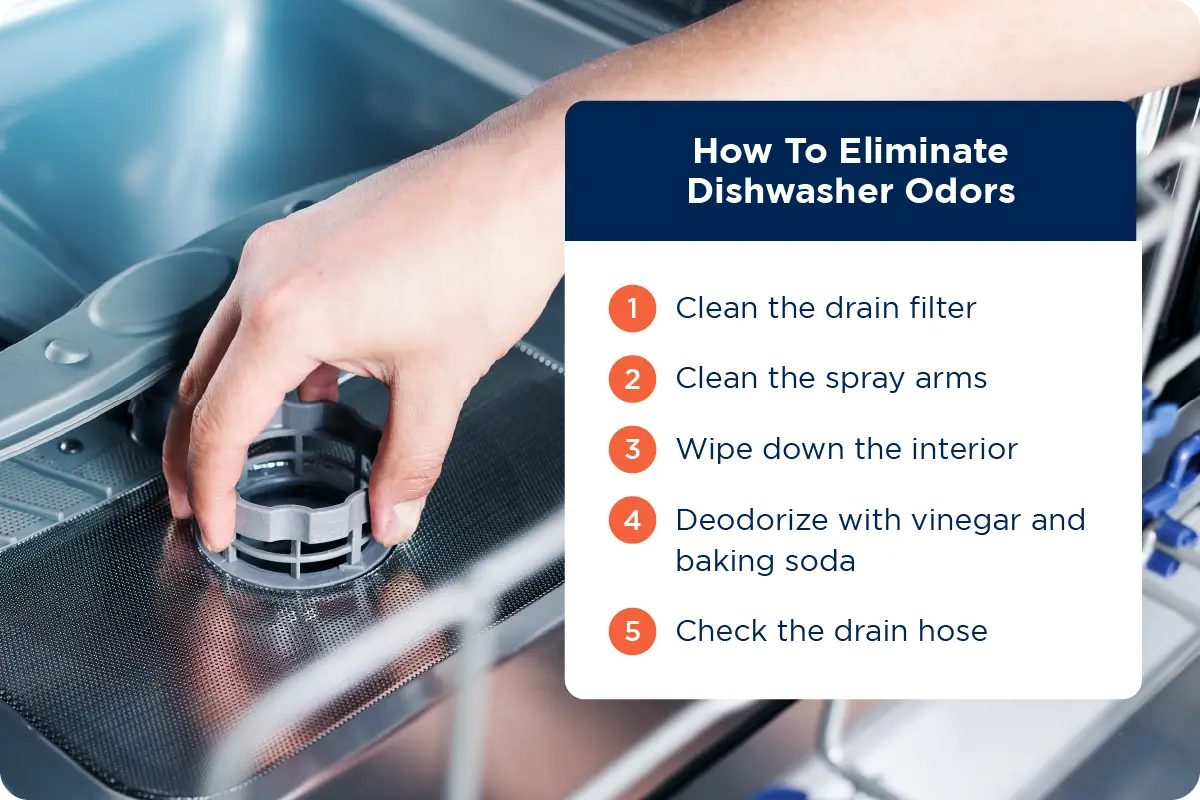
- Filter removal and wash. Take out the filter and soak in hot soapy water. Use a soft brush to clear trapped particles.
- Spray arm cleaning. Remove arms if possible. Rinse jets with warm water and use a toothpick to clear blocked holes.
- Door gasket and seal care. Wipe the rubber seal with warm water and a mild detergent. Check for mold and clean with diluted hydrogen peroxide if needed.
- Drain and sump check. Clear any debris near the drain. Use a gentle brush to remove grime.
- Use citric acid cycle for scale. Dissolve 1–2 tablespoons of citric acid in hot water and run an empty hot cycle to remove calcium deposits.
These steps help when regular cleans do not fix odors or poor spray performance.

Maintenance tips and schedule
Keep a simple routine to avoid big jobs later.
- Daily: Scrape plates and rinse large food pieces before loading.
- Weekly: Check filter and wipe seals. Run a baking soda rinse.
- Monthly: Deep-clean filter, spray arms, and door gaskets. Run a citric acid cycle.
- Every 3–6 months: Use a dishwasher cleaner tablet if you have hard water or persistent residue.
Avoid overloading and use the correct detergent amount. Hard water needs more frequent descaling. These habits extend the life of your dishwasher and lower repair needs.
Troubleshooting common problems
If you notice bad smells after you clean dishwasher without vinegar, try these fixes.
- Persistent odor: Clean the filter and run a citric acid cycle. Check for trapped food under spray arms.
- Poor washing: Ensure spray arms spin freely. Clear blockages and check water temperature.
- White scale or film: Use citric acid or a commercial descaler. Repeat monthly if water is hard.
- Mold or mildew in seals: Wipe with diluted hydrogen peroxide and air-dry the door slightly cracked after cycles.
If issues persist, check the owner’s manual or contact a service professional to avoid damage.

Personal experience and lessons learned
I once used too much store cleaner and caused suds to leak from the door. Since then I learned to use small doses and rinse parts well. Baking soda plus hot water erased odors fast in an old machine I maintain. The biggest lesson: small regular cleans beat rare deep cleans. Be gentle with seals and avoid harsh mixes like bleach plus acids.

Frequently Asked Questions of how to clean dishwasher without vinegar
What is the best substitute for vinegar to remove scale?
Citric acid is the best substitute for removing scale. It dissolves mineral deposits without strong fumes and is safe for most dishwasher parts.
Can I use baking soda every wash?
You can use baking soda occasionally for deodorizing. Do not use it with detergent every wash; use it in empty cycles as a rinse.
Is bleach safe for dishwasher cleaning?
Bleach can sanitize, but only when the manual allows it for your model. Never mix bleach with citric acid, vinegar, or hydrogen peroxide.
How often should I deep clean my dishwasher?
Deep clean every 1–3 months depending on use and water hardness. Heavy use or hard water calls for more frequent descaling.
Will lemon juice damage dishwasher parts?
Lemon juice is mild and safe in small amounts for occasional cleaning. Avoid frequent use on older metal parts that may be sensitive to acids.
Can I use a commercial dishwasher cleaner instead of vinegar?
Yes, commercial cleaners are made for dishwashers and often contain citric acid or enzymes. They are a safe vinegar-free option.
Conclusion
You can clean your dishwasher without vinegar using baking soda, citric acid, lemon, and safe cleaners. Use short weekly routines and monthly deep cleans to stop odors and scale. Try one method today and sign up for tips or leave a comment sharing your results.