
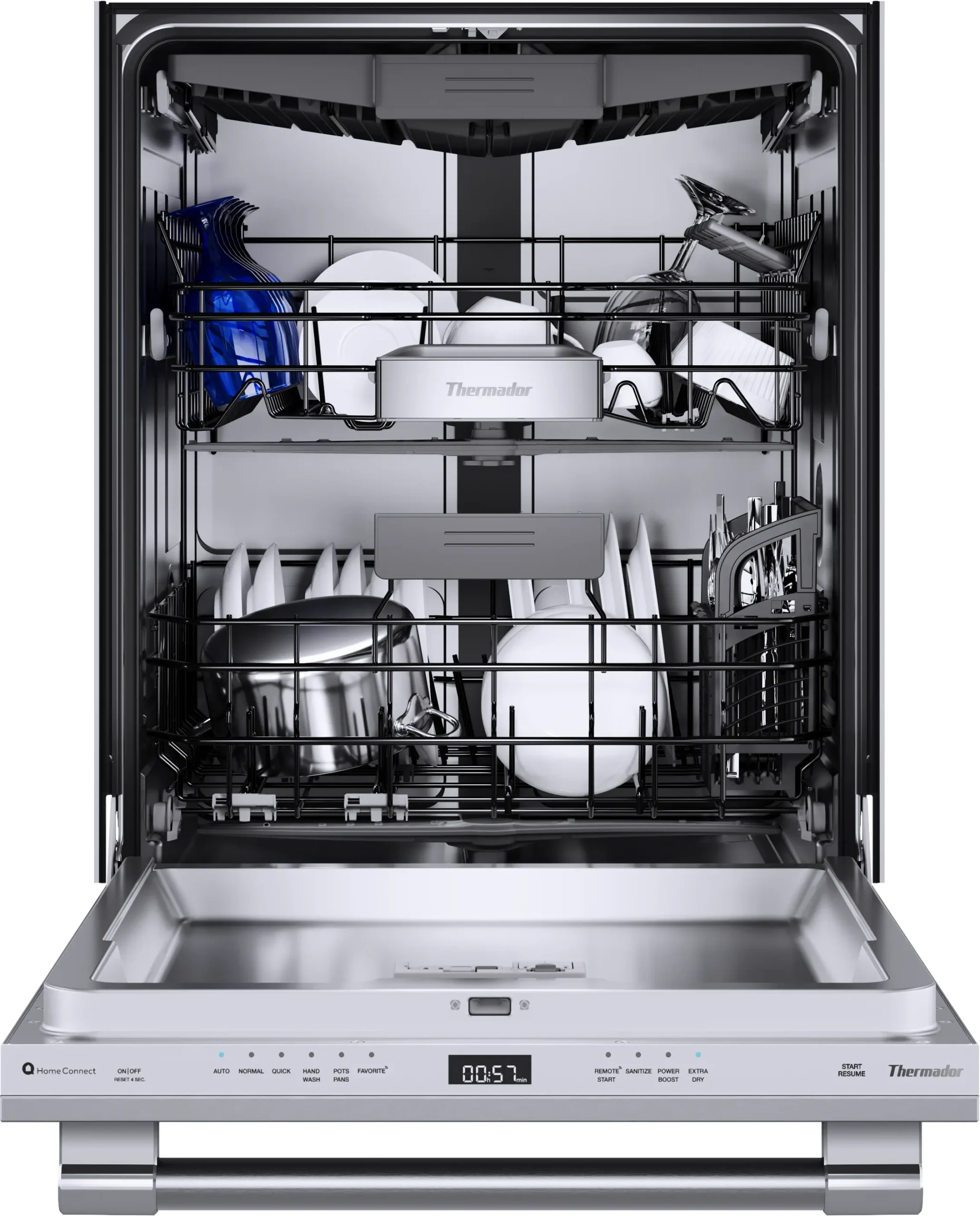
Start the dishwasher: load dishes, add Thermador detergent, select cycle, and press Start.
I have spent years installing, testing, and teaching people how to use Thermador dishwasher models. This guide gives clear steps, tips, and real-life advice so you can run cycles confidently, protect fragile items, and keep your appliance performing well. Read on to learn how to use Thermador dishwasher features, choose cycles, maintain the unit, and fix common problems—presented in plain language and tested routines from experience.

Quick start guide: how to use Thermador dishwasher step-by-step
Follow these simple steps when you first learn how to use Thermador dishwasher. The sequence below works for most Thermador built-in and panel-ready models.
- Inspect and prep dishes
- Remove large food scraps and rinse only if heavily soiled.
- Stack plates facing the spray, bowls angled downward.
- Load racks
- Place glasses on the top rack between tines.
- Put pots and pans on the bottom rack facing the center.
- Add detergent and rinse aid
- Use the recommended dishwasher detergent in the main dispenser.
- Fill the rinse aid reservoir for better drying and no spots.
- Choose cycle and options
- Select an appropriate cycle (Auto, Normal, Heavy, Eco).
- Add options like Sanitize, Extra Dry, or Delay Start if needed.
- Start the dishwasher
- Close the door fully. Press Start or Start/Resume.
- Lock the controls if you have children at home.
Personal tip: I found that using the Auto or Sensor cycle handles mixed loads best. It saves time and energy and reduces the need for pre-rinsing.
Loading and rack organization: best practices for spotless dishes
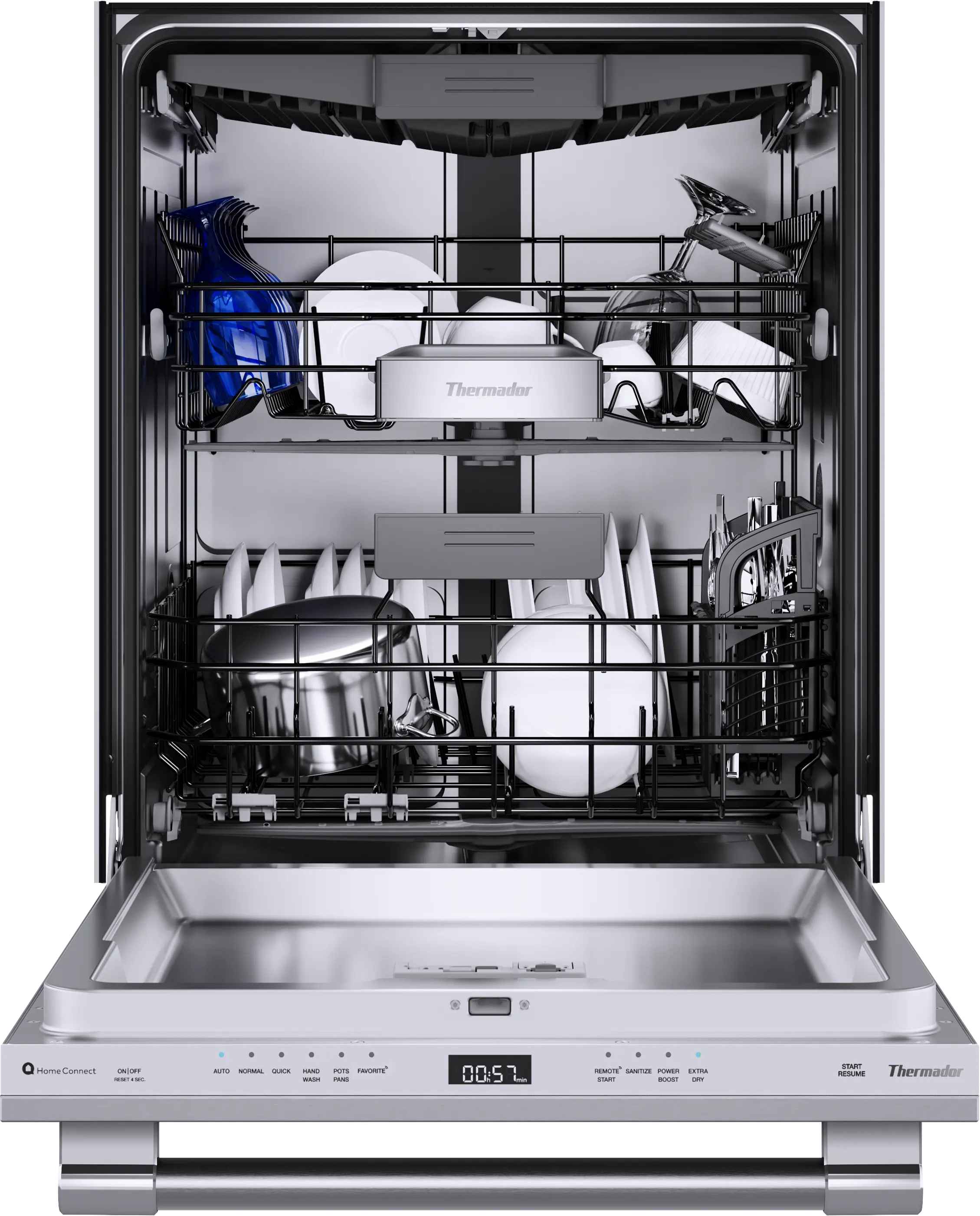
Proper loading is core to how to use Thermador dishwasher effectively. Good loading lets water reach every surface and prevents chipping.
- Top rack uses
- Place cups, small bowls, and stemware upside down.
- Use the stemware holders or fold-down tines for fragile glasses.
- Bottom rack uses
- Load plates and large bowls along the sides and back.
- Stand large pans at an angle toward the spray arm.
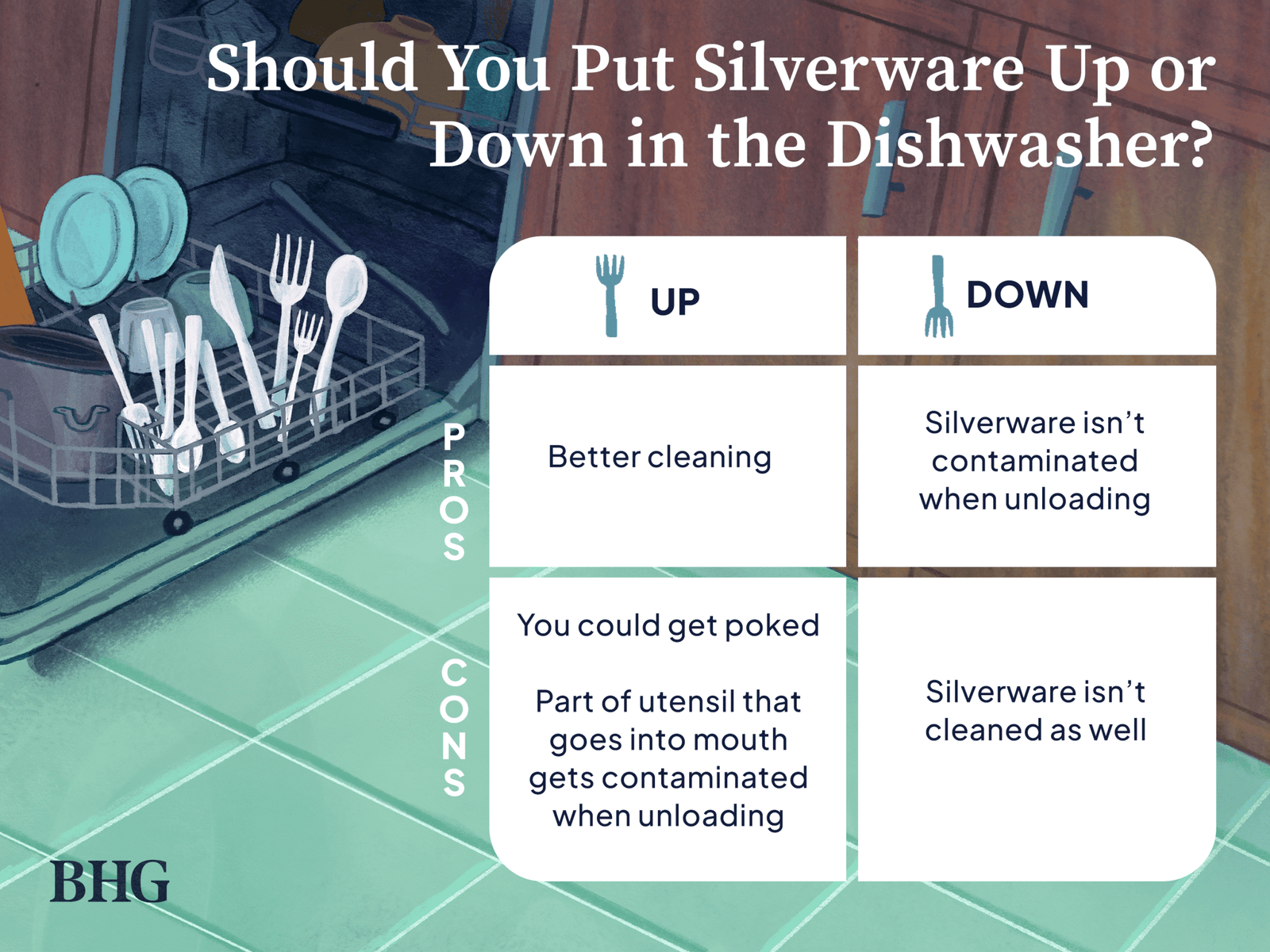
- Silverware basket
- Mix spoons, forks, and knives to avoid nesting.
- Point sharp knives down for safety.
- Avoid blocking the spray arms
- Ensure nothing stops the upper and lower spray arms from rotating.
- Small items should be secured or placed in a cutlery tray to avoid falling.
Example: I once loaded wine glasses too close together and lost two to cracking. Now I leave space and use the special holders, and breakage stopped.

Controls, cycles, and what they mean
Knowing how to use Thermador dishwasher cycles saves time and avoids repeated runs. Here are the common cycle options and when to use them.
- Normal
- Use for everyday loads with typical food residue.
- Heavy
- Best for pots, pans, and heavily soiled dishes.
- Auto or Sensor
- The machine measures soil and adjusts time and water. Use this for mixed loads.
- Eco
- Uses less water and energy. Good for lightly soiled items.
- Quick or Express
- Short cycle for lightly soiled plates. Not for pots.
- Sanitize
- Raises water temperature to kill bacteria and is useful for baby items.
PAA-style question: How long is a Thermador cycle?
- Answer: Cycle length varies. Auto and Heavy cycles can run 90–150 minutes, while Express cycles can be 30–60 minutes depending on the model.
When you first learn how to use Thermador dishwasher, read the control panel labels. Most models show clear icons and have touch or button controls with LED indicators.
Detergent, rinse aid, and water hardness: what to use
Using the right products improves cleaning and protects the dishwasher. Here’s how to use Thermador dishwasher detergent and additives.
- Detergent type
- Use high-quality dishwasher detergent—powder, gel, or pod—compatible with your model.
- Avoid using too much. Follow dosing on the package.
- Rinse aid
- Fill the rinse aid dispenser and adjust the level to reduce spots.
- Replace when the indicator light or gauge shows low.
- Salt and water hardness
- Some regions have hard water. If your Thermador model supports water softening, follow the manual to add salt.
- Hard water might need more rinse aid to prevent spots.
Personal insight: I switched to a low-foam detergent recommended for dishwashers with a high-temp sanitize option. My glasses came out clearer and drying improved.

Daily care and periodic maintenance
Routine upkeep keeps your Thermador dishwasher running longer and cleans better. Learn how to use Thermador dishwasher maintenance steps below.
- After every run
- Wipe the door edges and gasket to prevent odors.
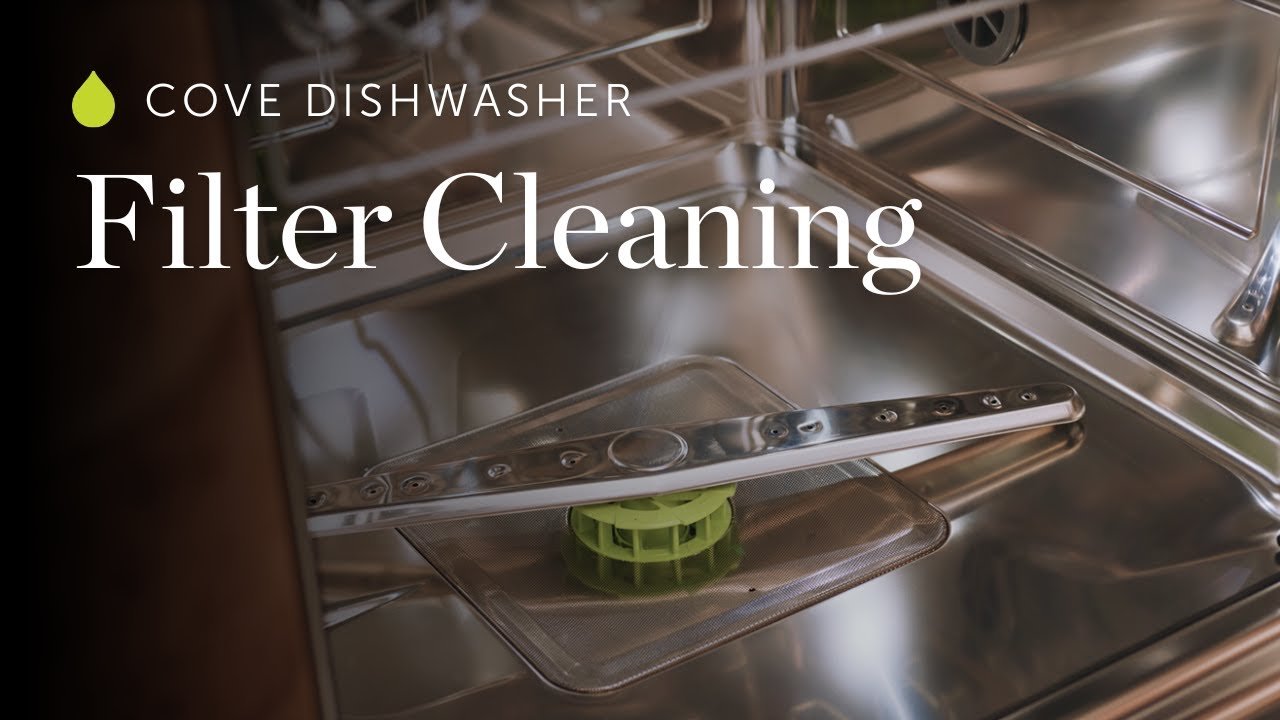
- Remove and drain any trapped food from the filter.
- Weekly
- Check spray arms for clogs and clear any debris.
- Run a quick hot-water rinse if you had greasy loads.
- Monthly
- Clean the filter assembly according to the manual.
- Run an empty cycle with a dishwasher cleaner to remove limescale and grease.
- Annual
- Inspect hoses for wear and replace if they show signs of cracking.
- Consider a professional service check for seals and pumps.
Real-life tip: Skipping filter cleaning once led to a poor drain and smell. Cleaning the filter fixed it immediately. Regular simple care prevents that.
Troubleshooting common issues and quick fixes
When something goes wrong, a few basic checks can help you fix common problems without a service call. This section helps you troubleshoot how to use Thermador dishwasher when it behaves oddly.
- Dishwasher won't start
- Check the door latch and ensure the door is fully closed.
- Confirm the appliance has power and the circuit breaker is on.
- Poor cleaning results
- Make sure detergent is fresh and the spray arms spin freely.
- Avoid overloading and check for blocked nozzles.
- Dishes not drying
- Use the Extra Dry option or add rinse aid.
- Check for an interrupted heat cycle or open vent issues.
- Strange noises
- Remove and reposition items that might hit spray arms.
- Inspect for loose items in the pump area.
- Leaks
- Inspect the door gasket for debris or damage.
- Check that the lower rack is seated and not interfering with the door seal.
If a problem persists after these steps, consult official Thermador diagnostics or schedule a technician. Be transparent about model numbers and error codes when seeking help.
Energy, safety, and best-practice tips
Efficient and safe use extends the life of your dishwasher. These are simple steps that matter.
- Run full loads
- Full loads save water and energy compared to several small cycles.
- Use Eco or Auto cycles for efficiency
- They adjust water and energy use without sacrificing cleanliness.
- Child lock
- Engage the control lock to prevent accidental changes.
- Avoid sharp or non-dishwasher-safe items
- Hand-wash delicate crystal and wooden utensils.
- Ventilation
- Allow the dishwasher to cool before unloading to avoid steam burns.
From experience, using the Delay Start to run cycles at night reduced my utility costs and fit my schedule well.
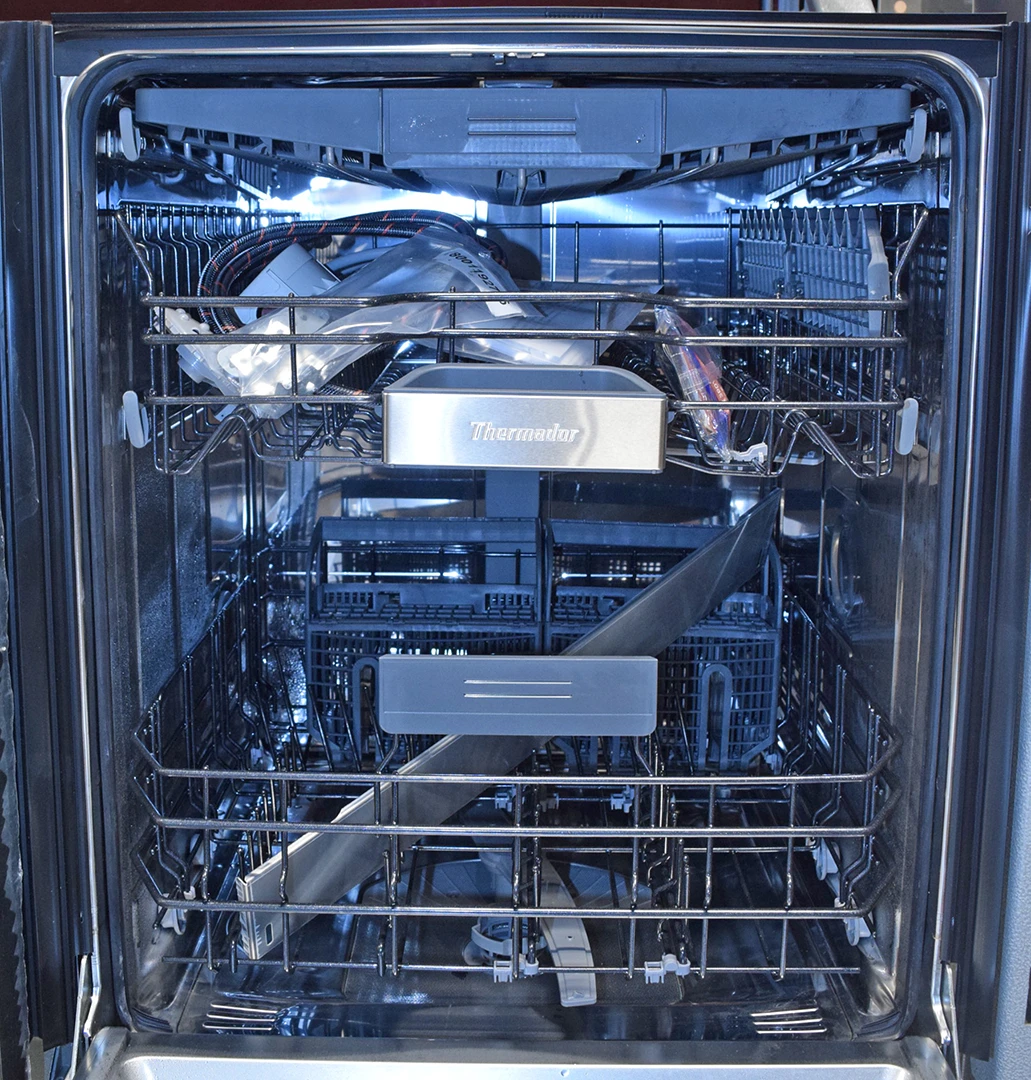
Frequently Asked Questions of how to use thermador dishwasher
How often should I clean the filter?
Clean the filter every 1–4 weeks depending on use. Heavy or frequent loads need more frequent cleaning.
Can I use pods in my Thermador dishwasher?
Yes, pods are generally fine. Place them in the detergent dispenser, not loose in the tub, for proper dissolution.
Do I need to rinse dishes before loading?
You do not need to pre-rinse if you scrape off large food particles. Thermador sensor cycles handle normal food soils well.
What does the sanitize option do?
Sanitize raises the final rinse temperature to reduce bacteria. It is useful for baby bottles and cutting boards.
Why are my glasses cloudy after washing?
Clouding can be from hard water, too much detergent, or etching. Use rinse aid and adjust detergent amounts or water softening if available.
Conclusion
You now have a clear, practical roadmap for how to use Thermador dishwasher. Load smart, choose the right cycle, use the proper detergent and rinse aid, and keep up with simple maintenance to get the best results. Start today by running an Auto cycle with a well-loaded rack and a clean filter—small habits lead to big savings and cleaner dishes. Try one tip from this guide and see the difference, then come back and share your results or ask questions below.