
Store pita at room temperature for 2 days or freeze for up to 3 months.
As a baker and long-time home cook, I know exactly how to store pita bread so it stays soft, mold-free, and ready for sandwiches or dips. This guide covers practical steps, food-safety tips, troubleshooting, and personal tricks I learned running a small bakery—everything you need to preserve fresh pita flavor and texture whether you use it in two days or two months.
:max_bytes(150000):strip_icc()/GettyImages-584182529-58445e6e3df78c0230e37f8e.jpg)
Why proper storage matters
Keeping pita fresh is about two things: preventing mold and preserving moisture. If you don’t follow clear storage steps, pita dries out, becomes chewy, or grows mold within a few days. Knowing how to store pita bread helps you avoid waste and keeps home meals tasting their best.
From experience, customers complained most about dry, brittle pita—so I built simple routines that work both for home cooks and small bakeries. These routines are safe, easy, and repeatable.
Short-term storage: room temperature and refrigerator
If you plan to eat pita within 48 hours, room temperature is best. Room-stored pita keeps a soft crumb and flexible pocket when protected from air and humidity swings.
Room-temperature steps
- Keep pita in its original bag or wrap it in plastic wrap or a clean airtight container.
- Store on a cool, dry shelf away from direct sunlight.
- Use within 48 hours for best texture.
When to use the refrigerator
- Refrigeration slows mold but dries breads faster due to cool, dry air.
- If your home is warm and humid, refrigerate pita in an airtight bag to reduce mold risk but expect firmer texture.
- To soften chilled pita, warm it briefly in a hot skillet or microwave before serving.
These short-term methods show how to store pita bread safely without losing flavor. Small changes—like double-bagging after the loaf cools—make a big difference in freshness.
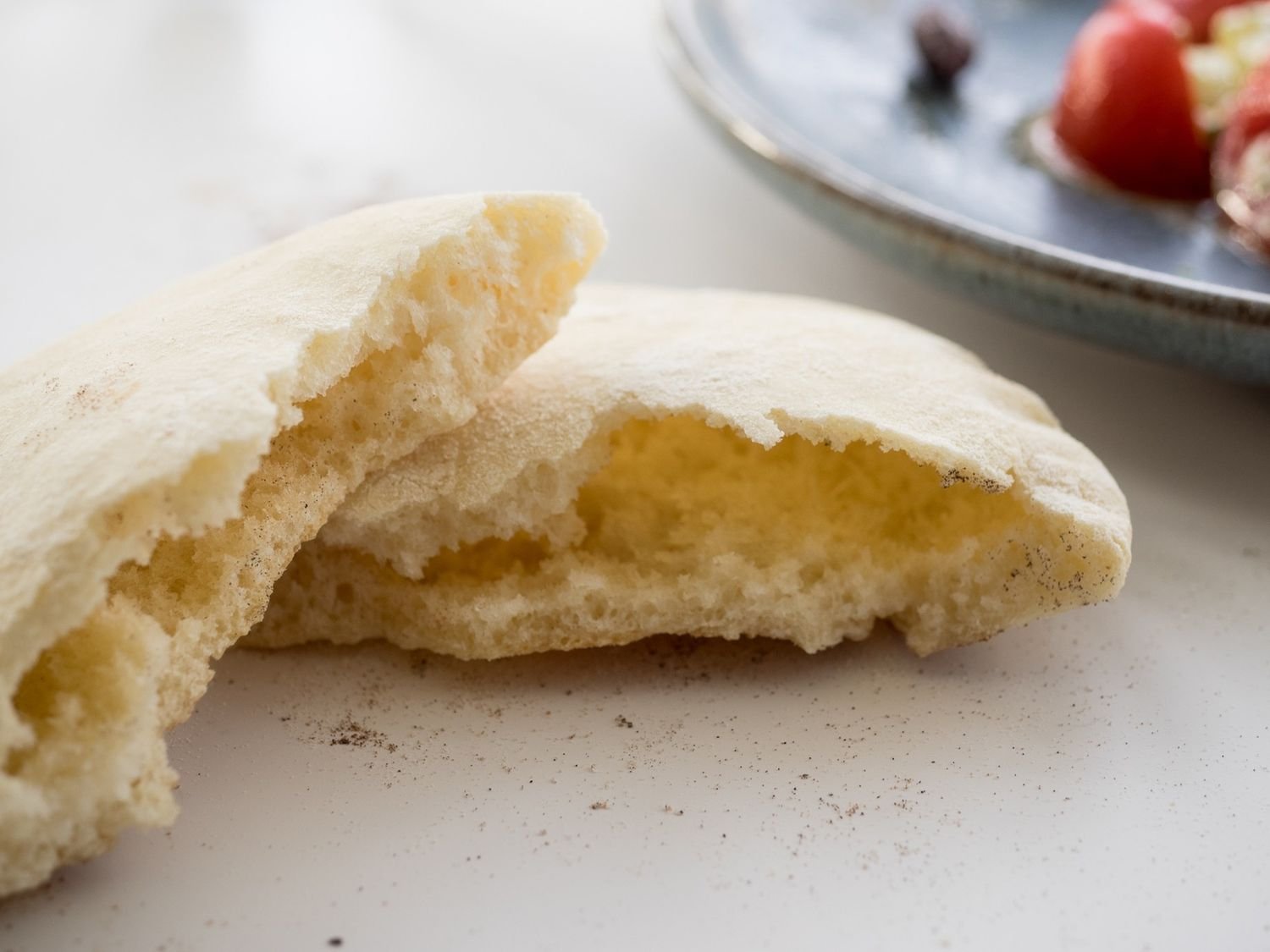
:max_bytes(150000):strip_icc()/AR-232719-homemade-pita-bread-DDMFS-4x3-beauty-4f82a2ae98444cf58969214e3d8f66f0.jpg)
Long-term storage: freezing pita for best results
Freezing is the best method when you want to save pita beyond a few days. Freezing locks in moisture and flavor without the staling that refrigeration causes.
How to freeze pita
- Cool completely: Let fresh pita reach room temperature before freezing.
- Stack with parchment: Place small parchment or wax-paper layers between rounds to prevent sticking.
- Use airtight packaging: Put stacked pita into a heavy-duty freezer bag, squeeze out air, and seal tightly.
- Label and date: Freeze for up to 3 months for best quality.
Thawing and using frozen pita
- Thaw at room temperature in the sealed bag for 30–60 minutes for soft pita.
- For a quick option, microwave a pita wrapped in a damp paper towel for 10–15 seconds.
- Reheat in a skillet or oven for chew and slight char.
Freezing answers the main question of how to store pita bread long term. It preserves texture and taste with minimal fuss and reliable results.

Reviving and reheating pita
Sometimes pita gets stale or a little dry. Reviving it is quick and brings back flexible pockets for sandwiches.
Reviving methods
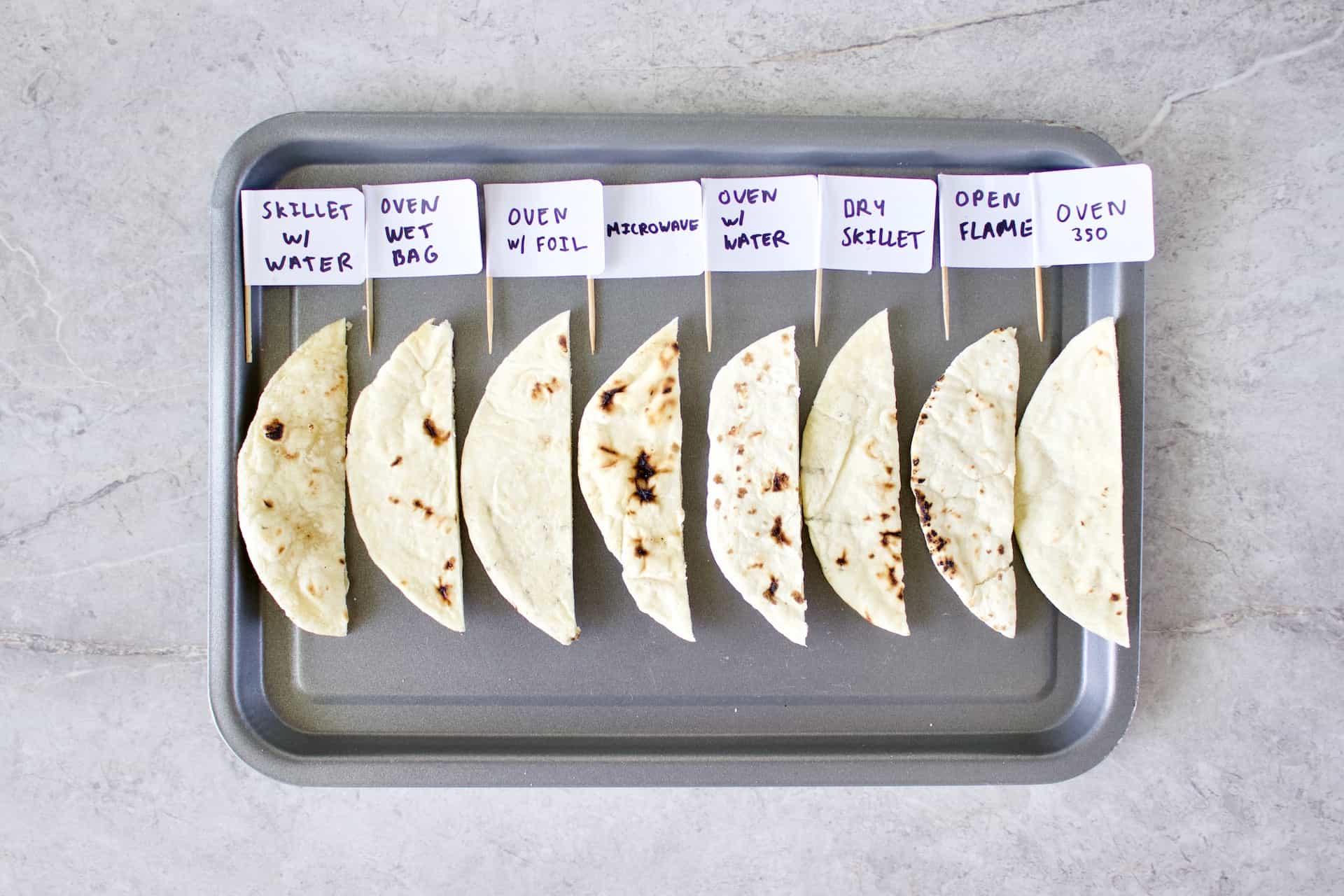
- Skillet method: Heat a dry skillet over medium-high heat for 20–30 seconds per side until warm and pliable.
- Oven method: Wrap pita in foil and warm at 350°F (175°C) for 5–8 minutes.
- Microwave method: Wrap in a damp paper towel and heat 10–20 seconds to soften.
Tips for best results
- Avoid overheating, which makes pita tough or chewy.
- If you store pita frozen, toast it briefly after thawing to regain a fresh-baked aroma.
- Add a light brush of olive oil for flavor and to soften the crust while reheating.
These quick steps show practical ways to revive pita and illustrate how to store pita bread so it remains easy to refresh when needed.
Common mistakes and pro tips
Avoiding a few common errors will keep your pita tasting great and reduce waste.
Mistakes to avoid
- Leaving pita exposed to the open air, which dries it quickly.
- Refrigerating without sealing, which speeds staling.
- Freezing warm pita, which traps moisture and causes ice crystals.
Pro tips from my bakery days
- Cool pita completely before sealing to prevent sogginess in storage.
- Freeze single portions if you often use one or two pitas at a time.
- Reuse vacuum-seal bags for repeated freezes to save money and space.
- Keep a small loaf in a bread box for daily use and freeze the rest.
These tips reflect both food-safety practices and practical kitchen habits that answer common questions about how to store pita bread in real life.
:max_bytes(150000):strip_icc()/AR-232719-homemade-pita-bread-DDMFS-4x3-beauty-4f82a2ae98444cf58969214e3d8f66f0.jpg)
Frequently Asked Questions of how to store pita bread
How long does pita bread last at room temperature?
Pita stored at room temperature in an airtight bag will stay fresh for about 48 hours. After that, texture declines and mold risk increases.
Can I refrigerate pita to keep it longer?
Yes, refrigeration can delay mold in warm climates but will make pita firmer and drier. Seal tightly and warm before serving to restore softness.
Is it safe to freeze pita bread?
Freezing pita is safe and effective for long-term storage up to 3 months. Proper packaging prevents freezer burn and preserves flavor.
How do I thaw frozen pita without drying it out?
Thaw sealed pita at room temperature or microwave wrapped in a damp paper towel for a few seconds. Reheat briefly in a skillet or oven to refresh texture.
Will homemade pita store the same as store-bought pita?
Homemade pita often has no preservatives, so it may mold or stale faster. Use airtight storage and freeze extra batches to keep freshness.
Can I toast pita straight from the freezer?
Yes, you can toast or warm frozen pita directly; it may take a minute longer than thawed pita. Watch closely to avoid burning.
Conclusion
Storing pita bread well is simple: for short use, keep it sealed at room temperature; for long-term storage, freeze properly and thaw gently. My hands-on experience shows that cooling before sealing, using airtight packaging, and reheating with moisture make the biggest difference. Try freezing single portions and reheating in a hot skillet for the easiest everyday wins. If this guide helped, try these methods tonight, leave a comment with your results, or subscribe for more practical kitchen tips.