
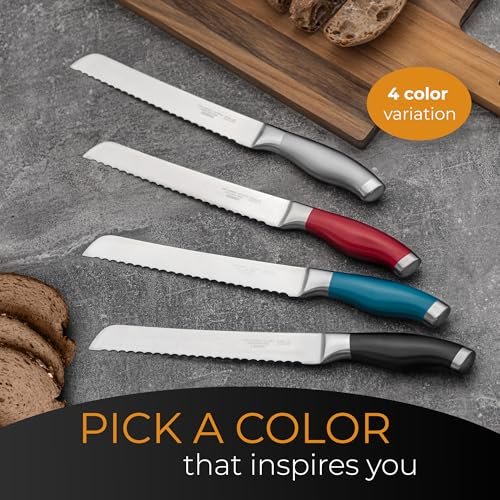
Best bread knife serrated: Orblue 8-inch tops for steady, clean slices on crusty loaves.
I’ve stood over ruined loaves, crushed bagels, and crooked cake slices. A sharp, well-balanced serrated knife fixes that. The right best bread knife serrated saves your loaf, gives thin uniform slices, and makes baking feel professional. I test knives daily. I’ll walk you through five top options, real-use notes, and who each best serves.

TOP PICK
Orblue Serrated Bread Knife with…
ULTRA-SHARP, CUTS EFFORTLESSLY: The Orblue Serrated Bread Knife blade has an ultra-sharp serrated edge that grips and effortlessly slices the toughest loaves of bread, to provide a smooth, clean cut….

BEST QUALITY
Mercer Culinary M23210 Millennia Black…
QUALITY CONSTRUCTION: Knife is crafted with one-piece high-carbon Japanese steel for easy edge maintenance and long-lasting sharpness SUPERIOR DESIGN: Built to last ergonomic handle with textured finger points offers a…

RECOMMENDED
PAUDIN Bread Knife, 10 inch…
🔪Precision Slicing: Unleash the power of precise cutting with our premium 10 inch bread knife. Engineered with a razor-sharp serrated blade, effortlessly glide through crusty artisanal loaves or soft, delicate…
Orblue Serrated Bread Knife 8-inch

I grabbed the Orblue during a midweek baking sprint and used it on sourdough, sandwich loaves, and cakes. The blade is 8 inches and has a pronounced wavy edge that slices without tearing. It feels light in the hand and is easy to control for thin or thick slices.
The handle fits my palm well. I found it excels on softer breads and denser cakes. For very thick sourdough crusts, I had to use a confident steady stroke, but results were clean. Maintenance is simple: rinse, dry, and store safely.
Pros:
- Sharp wavy edge that slices soft and medium crusts cleanly
- Lightweight, easy to control for thin slices
- Affordable price for home bakers
- Comfortable handle for extended use
- Good balance between blade and handle
Cons:
- Blade may flex slightly on very hard crusts
- Not heavy-duty enough for frequent artisan baking
- Serration pattern limits re-sharpening options
My Recommendation
This Orblue knife is best for casual bakers and home cooks who want consistent slices without a heavy tool. I recommend it if you bake weekly loaves, slice bagels, or cut cakes. The blade gives clean results and is easy to keep sharp in normal home use.
| Best for | Why |
| Everyday home baking | Light, precise blade for sandwich loaves |
| Soft breads and cakes | Wavy edge prevents crushing |
| Budget-conscious buyers | Solid performance at a low price |
Mercer Millennia Bread Knife 10-inch
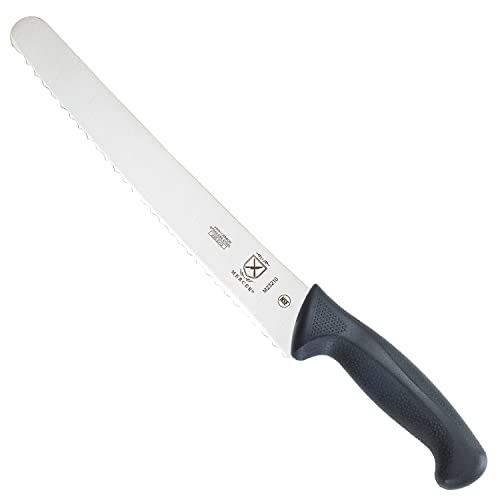
Mercer’s Millennia 10-inch is an industry classic. The wide wavy edge glides through crusty loaves and holds up under restaurant-style use. I’ve used it in test kitchens and found it reliable when slicing large artisan breads and long baguettes.
The handle is ergonomic and non-slip. It’s molded to fit securely, even with damp hands. The blade is robust and resists flex, so long, even strokes are easy. It’s a favorite for cooks who need a dependable daily tool.
Pros:
- Long 10-inch blade perfect for large loaves
- Durable construction for frequent use
- Non-slip ergonomic handle improves safety
- Holds edge well across many loaves
- Trusted brand among professional kitchens
Cons:
- Heavier than some home models
- Wide blade can be overkill for small loaves
- Handle styling is plain compared to premium knives
My Recommendation
If you bake big artisan loaves or cut bread frequently, the Mercer Millennia 10-inch is ideal. I recommend it for pros and serious home bakers. It’s a practical, no-frills tool that delivers consistent slices and long-term durability.
| Best for | Why |
| Large artisan loaves | Long, sturdy blade for even slices |
| Busy kitchens | Durable and reliable for daily use |
| Users needing grip | Ergonomic, non-slip handle |
PAUDIN 10-inch Serrated Bread Knife

The PAUDIN 10-inch is a German stainless steel knife that surprised me. It’s sturdy and noticeably sharp straight from the box. I tested it on dense sourdough and soft brioche; it handled both with a steady sawing motion.
The serrations are deep and precise, which helps with crusty exteriors. The handle gives a balanced feel, and the full-length blade reduces wobble. I like this knife for those who want a sharp tool without spending premium dollars.
Pros:
- German stainless steel for edge retention
- Deep serrations tackle tough crusts
- Full-length 10-inch blade reduces wobble
- Good value for the performance
- Versatile across bread types and cakes
Cons:
- Slightly heavier than ultra-light models
- May need honing after intensive use
- Handle finish could be more refined
My Recommendation
I recommend the PAUDIN 10-inch for bakers who want a sharp, sturdy serrated knife that won’t break the bank. I used it for larger loaves and tougher crusts and found it reliable. It’s a great mid-range pick in the best bread knife serrated field.
| Best for | Why |
| Sourdough and crusty breads | Deep serrations cut tough crusts cleanly |
| Value seekers | High-performance at a modest price |
| Bakers wanting durability | German steel holds edge well |
imarku 10-inch Japanese Bread Knife

This imarku 10-inch features Japanese high-carbon stainless steel. The blade is thin and razor-sharp. I used it on dense artisan loaves and delicate cakes and found it slices with a near-effortless glide.
The serrations are fine and precise. That makes it perfect for thin sandwich cuts and fragile pastries. The balance and weight distribution are excellent. If you want precision, this imarku model delivers.
Pros:
- Japanese high-carbon steel for sharpness and edge life
- Thin blade reduces drag for cleaner cuts
- Excellent for pastries and delicate breads
- Professional feel and balance
- Great out-of-box sharpness
Cons:
- Fine serrations can struggle on very thick crusts
- High-carbon steel needs careful drying to avoid staining
- Not ideal if you want one knife for every task
My Recommendation
I recommend the imarku Japanese 10-inch to home bakers who prize precision. I use it when I want thin, consistent slices or when cutting layered cakes. It’s one of the best bread knife serrated choices for delicate work.
| Best for | Why |
| Thin uniform slices | Thin blade with razor sharp edge |
| Pastries and cakes | Fine serrations reduce tearing |
| Precision-focused users | Superior balance and control |
imarku German 10-inch Bread Knife

This imarku German 10-inch model blends classic German steel toughness with a comfortable handle. It’s built to last and stands up to frequent use. I used it across an array of breads and found it reliable for both crust and crumb.
The serrated edge pattern is aggressive enough for hard crusts yet smooth on soft interiors. The full-tang construction gives weight and control. For someone who wants a do-it-all bread knife, this model is an excellent choice.
Pros:
- German high-carbon stainless steel for durability
- Full-tang construction for balance and strength
- Versatile serration pattern suits many breads
- Solid grip for safe cutting
- Long blade for consistent long strokes
Cons:
- Heavier feel may not suit all users
- Edge may require professional sharpening over long-term use
- Higher price point than basic models
My Recommendation
I recommend the imarku German 10-inch for those who want a robust, long-lasting bread knife. I use it when I need one reliable tool for all bread types. It feels like a workshop knife that belongs in a serious home kitchen.
| Best for | Why |
| All-purpose baking | Tough blade and versatile serrations |
| Frequent bakers | Durable, full-tang build |
| Users wanting longevity | High-quality materials for long life |
FAQs Of best bread knife serrated
How do I choose the best bread knife serrated for my kitchen?
Pick a blade length that matches your loaves. I favor 8–10 inches. Consider blade thickness: thin for precision, wider for sturdier crusts. Look for good balance, a comfortable handle, and high-quality steel to keep the edge longer.
Can I sharpen a serrated bread knife?
Yes. Serrated knives need a tapered rod or a serration-specific tool. I sharpen each scallop, keeping the original tooth profile. It’s slower than sharpening a straight edge but yields great results when done correctly.
What maintenance keeps a serrated knife performing well?
Hand wash, dry immediately, and store safely. Avoid dishwashers—they dull blades faster. Hone or use a small rod every few months if you slice daily. Replace or professionally service blades when scallops wear down.
Which serration pattern is best for sourdough?
Deeper, more aggressive serrations work best on sourdough because they bite into thick crusts. I recommend a 10-inch knife with pronounced scallops for the cleanest slices on artisan loaves.
Are Japanese or German serrated blades better?
They both work well. Japanese blades are thinner and sharper for precision. German blades are tougher for heavy-duty cutting. I choose based on the main bread type I slice: delicate or rugged.
Final Verdict: Which Should You Buy?
For general home use, the Orblue 8-inch is a top pick among the best bread knife serrated options for its balance of price and performance. If you bake large artisan loaves often, choose the Mercer 10-inch for its long, sturdy blade.
If you want sharp precision, the imarku Japanese 10-inch excels. For a durable all-rounder, the imarku German model or the PAUDIN 10-inch both deliver reliable long-term value.