
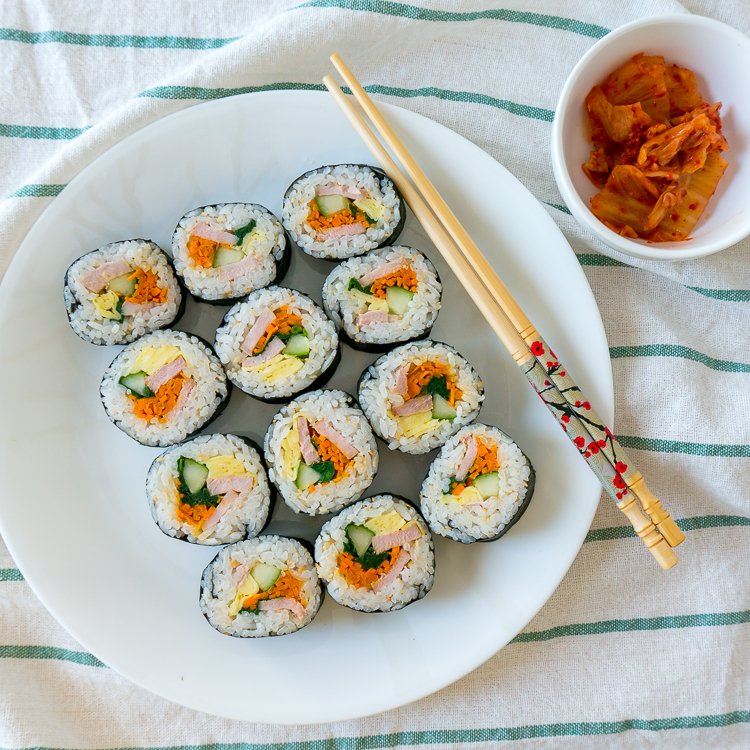
Kimbap is simple—rice, gim (seaweed), and fillings—but those layers respond differently to air, moisture, and temperature. Storing kimbap properly preserves flavor, prevents soggy seaweed or dry rice, and reduces food-safety risks. Below are clear, kitchen-tested methods for same-day holding, refrigeration, and freezing, plus packing and reheating tricks and common mistakes to avoid.
Why proper storage matters
Rice, seaweed, and fillings have different shelf lives and textures. Temperature and humidity change rice firmness and make nori go limp or chewy. Correct wrapping, cooling, and container choices keep texture and taste intact and prevent bacterial growth.
Quick guide at a glance
- Room temperature: eat within 4 hours (1–2 hours in hot weather).
- Refrigerator (≤4°C / 40°F): best within 24–48 hours.
- Freezer (≤ -18°C / 0°F): best quality for 1–2 months.
Same-day storage (4–6 hours)
If you’ll eat your kimbap the same day, follow these steps:
- Cool fillings completely before assembling (warm fillings cause condensation).
- Wrap each whole roll or slice tightly in plastic wrap to lock in moisture and limit air exposure.
- Place wrapped kimbap in a shallow container or lunchbox—lay rolls seam-side down to keep shape.
- Keep out of direct sun and away from heat. If the ambient temperature is below 21°C (70°F), you can hold up to 4 hours; in heat, reduce to 1–2 hours.
- For outdoor picnics, use an insulated bag with cold packs to extend safe holding time.
Refrigerating kimbap (24–48 hours)
Refrigeration slows bacterial growth but changes texture. Minimize problems with these steps:
- Cool all fillings to room temperature before wrapping.
- Wrap each roll tightly in plastic wrap; if sliced, wrap slices in a single layer with parchment between to prevent sticking.
- Place wrapped pieces upright or flat in an airtight container to protect shape and avoid crushing.
- Store in the coldest part of your fridge (not the door); maintain ≤4°C (40°F).
- Before serving, let chilled kimbap sit 10–15 minutes at room temperature or warm briefly (see reheating below) to soften rice and improve mouthfeel.
Common issues: chilled rice firms and nori can become chewy. Consider separating nori from rice when possible and rewrap before serving.
Freezing kimbap (long-term storage)
Freezing is useful if you need longer storage but expect texture changes (rice can dry or crumble; watery vegetables go limp).
Best practices:
- Choose fillings that freeze well: cooked proteins (bulgogi, tuna), egg, pickled vegetables (danmuji/pickled radish), and spinach. Avoid raw watery veg like cucumber or lettuce.
- Freeze whole rolls for better shape and texture. If you must slice, flash-freeze slices on a tray first, then wrap.
- Wrap tightly in plastic wrap, then in foil or a freezer bag. Squeeze out excess air to prevent freezer burn.
- Label with date and use within 1–2 months for best quality.
- Thaw slowly in the refrigerator overnight before reheating or serving.
Reheating and thawing tips
- Thaw frozen kimbap in the fridge overnight for even results.
- For refrigerated kimbap, let sit 10–15 minutes at room temperature to soften rice.
- To warm gently: steam for a few seconds or microwave for 10–15 seconds (spritz a tiny bit of water on the rice first). Avoid overheating—heat dries rice and can cook fillings further.
- If seaweed becomes chewy after chilling, serve immediately after a short steam; do not over-steam or it becomes soggy.
Packing and travel tips
- Wrap tightly in plastic wrap and place in an insulated lunch box for short trips.
- Use frozen ice packs and shade for all-day outings; a thin insulated bag can keep rolls fresh up to about 6 hours on cool days.
- Pack sauces separately in small leakproof containers to avoid sogginess.
- For slices, place parchment or wax paper between layers to prevent sticking.
Ingredient-specific storage advice
- Cucumber, lettuce, raw greens: short-lived—remove if storing more than a few hours; for freezing, avoid entirely.
- Pickled radish (danmuji), cooked spinach, tamagoyaki (egg), ham, and cooked meat: handle storage best—good candidates for refrigeration and freezing.
- Seafood: ensure cooked and fully cooled; raw seafood should be avoided in unrefrigerated kimbap.
- If freezing, swap watery fillings for sturdier items like pickled veg, cooked proteins, or egg.
Common mistakes to avoid
- Putting warm rolls directly into the fridge (causes condensation and sogginess). Cool completely first.
- Skipping tight wrapping—air dries rice and softens nori faster.
- Freezing rolls with raw watery vegetables—textures collapse when thawed.
- Leaving kimbap in the fridge beyond 48 hours—quality and safety decline.
Food safety checklist
- Keep refrigerator at ≤4°C (40°F); freezer at ≤ -18°C (0°F).
- Room temp hold: max 4 hours (1–2 hours if hot).
- Fridge: eat within 24–48 hours for best quality.
- Freezer: 1–2 months for best quality; safe longer but texture suffers.
- Discard if you see off smells, sliminess, or discoloration.
Practical ideas for lunches and travel
- Short trips (under 4 hours): wrapped rolls with a small ice pack.
- Longer trips/all-day: insulated bag + frozen packs and shade.
- Multiple servings: stack slices upright with parchment between; use small sauce containers for condiments.
Personal tips from practice
- Wrap within 10 minutes of making the roll and lay seam-side down—this helps preserve the shape.
- Freeze only when necessary—texture loss is often not worth it for fresh eaters.
- Test your method with a single roll before sending a batch to an event.
FAQ
Q: Can I freeze kimbap and keep good texture?
A: Yes, but expect changes. Freeze whole, tightly wrapped rolls and use within 1–2 months. Avoid watery fillings.
Q: How long can kimbap sit at room temperature?
A: Up to 4 hours at moderate temps; 1–2 hours in hot weather.
Q: Should I refrigerate whole or sliced?
A: Whole keeps shape better. Sliced is easier to eat but dries faster.
Q: How do I prevent soggy seaweed?
A: Wrap tightly, avoid wet fillings, and add sauces only when serving.
Q: Can I reheat refrigerated kimbap?
A: Yes—steam briefly or microwave 10–15 seconds with a light water spritz. Don’t overheat.
Conclusion
Storing kimbap well keeps flavor, texture, and safety intact. Cool fillings, wrap tightly, and choose refrigeration for short-term use or freezing for longer storage while tailoring fillings to the storage method. Try one technique at a time to find what works best for your schedule and tastes.