
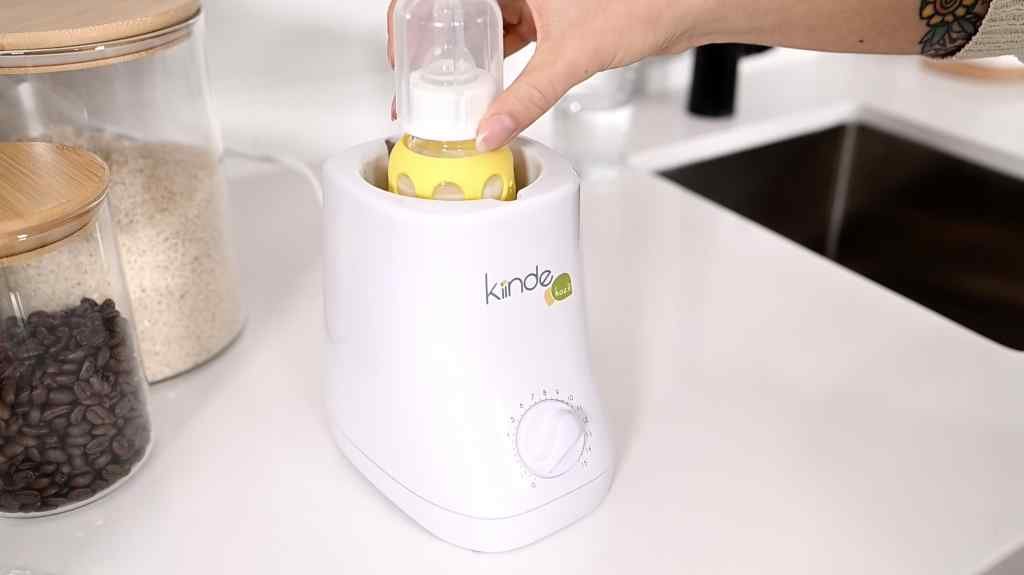
The Kiinde bottle warmer gently warms breast milk and formula with circulating warm water instead of direct high heat, reducing hot spots and preserving nutrients. This step‑by‑step guide shows exactly how to set up, use, clean, and troubleshoot the Kiinde (Kozii) bottle warmer, plus practical tips I learned from dozens of feeds to make nighttime and on‑the‑go warming faster and safer.
Why choose the Kiinde bottle warmer
- Gentle warming method preserves milk nutrients and reduces hot spots.
- Works with Kiinde Twist Pouches and many bottle brands using adapters.
- Simple controls, quick cycles—convenient for night feeds.
Limitations to know
- Requires the reservoir to be filled each session.
- Not a full “set-and-forget” warming station—some user attention required.
- Some bottle adapters may be sold separately.
What’s in the box and compatibility
Typical items:
- Base unit with water reservoir
- One or more adapters (brand-dependent)
- Manual and quick‑start guide
Compatibility tips
- Kiinde Twist Pouches are designed for this system; many wide- and narrow-neck bottles work using the right adapter.
- If your bottle brand isn’t listed, test adapter fit before relying on the warmer while away from home.
- Use only bottles and pouches rated for warm water warming to avoid damage.
Step‑by‑step: how to use the Kiinde bottle warmer
- Prepare the unit
- Fill the reservoir with warm tap water to the indicated level. Do not overfill.
- Plug in the unit. Wait for the ready indicator (if present).
- Attach bottle or pouch
- Choose and secure the correct adapter to your bottle or Kiinde pouch.
- Insert the bottle or pouch into the heating well, ensuring it sits straight and seals properly.
- Select warming cycle
- Choose the cycle based on the milk volume and starting temperature (room, refrigerated, or thawed).
- Start the cycle; typical warming for refrigerated milk ranges from about 3–8 minutes depending on ounces.
- Check temperature and serve
- After the cycle, gently swirl the bottle or pouch to mix the milk.
- Test a few drops on your wrist—milk should feel warm, not hot.
- If still cool, run a short top‑up cycle. If too hot, let it sit upright 30–60 seconds and retest.
Quick safety checklist
- Always check adapter fit and seals for leaks before starting.
- Never microwave milk while it’s in the Kiinde system.
- Supervise while in use and keep cords out of baby’s reach.
Cleaning and maintenance
Daily
- Empty and discard remaining water after each use to reduce buildup.
- Wipe the reservoir and heating well with a soft cloth; avoid abrasive cleaners.
Weekly
- Wash adapters and bottle inserts with warm, soapy water; rinse and air‑dry.
Descaling
- In hard-water areas, descale monthly using the manufacturer’s method or a mild vinegar solution, then rinse thoroughly.
- In soft-water areas, descale every 2–3 months or as needed.
Replace parts
- Replace cracked or loose adapters and seals immediately.
- Keep the manual for part numbers and warranty details.
Troubleshooting common issues
- Milk still cold after cycle: Confirm water level and that the bottle/pouch is seated correctly. Run an additional short cycle.
- Unit won’t power on: Check the outlet, try another outlet, inspect the cord for damage, and check home circuit breakers.
- Uneven warming/hot spots: Swirl milk after warming. The Kiinde’s circulating water reduces hot spots, but always test temperature.
Practical tips and mistakes to avoid
- Pre‑fill the reservoir at night if you expect multiple feeds—saves time and reduces stumbling in the dark.
- Use warm (not cold) tap water in the reservoir to shorten cycle times.
- Never substitute water with oils or cleaning solutions.
- Avoid reheating milk multiple times—use warmed milk within the recommended window and discard leftovers.
FAQs
Q:What temperature should breast milk be after warming?
A: Aim for body temperature (~98°F / 37°C). Wrist test: warm, not hot.
Q: Can I warm frozen milk? Thaw in the fridge first when possible.
A: If using the warmer, choose a longer, gentle cycle to protect milk quality.
Q: How long per ounce?
A: From refrigerator temp, expect about 1–2 minutes per ounce depending on model and starting temperature.
Q: Can I reheat milk more than once?
A: Not recommended. Use within guidance and discard leftovers.
Q: Do I need Kiinde bags?
A: Kiinde Twist Pouches are optimized, but many bottles and bags work with correct adapters.
Image and alt text suggestions (for SEO)
- Feature image alt text: “Kiinde bottle warmer warming a Twist Pouch”
- Step image alt text: “Insert Kiinde adapter on bottle and place in Kozii warming well”
- Cleaning image alt text: “Empty and wipe Kiinde bottle warmer reservoir”
Structured data recommendation
Add a simple FAQ schema (JSON‑LD) for the FAQ section to improve rich results visibility in search engines.
SEO & content tips
- Use target keywords in H1, first paragraph, meta title, and meta description.
- Keep headings H2/H3 keyword-rich and natural.
- Include internal links to related pages (e.g., “best breast pumps,” “how to store breast milk”) and one authoritative external link (manufacturer/user manual).
- Aim for 900–1,200 words to comprehensively cover intent. Use bulleted lists and short paragraphs for readability.
- Add an FAQ block and schema markup to increase chances for SERP features.
Call to action
Try these steps at your next feed—pre-fill the reservoir and test milk every time. If you have a specific Kiinde model or bottle brand, tell me and I’ll add model‑specific cycle times and adapter recommendations.