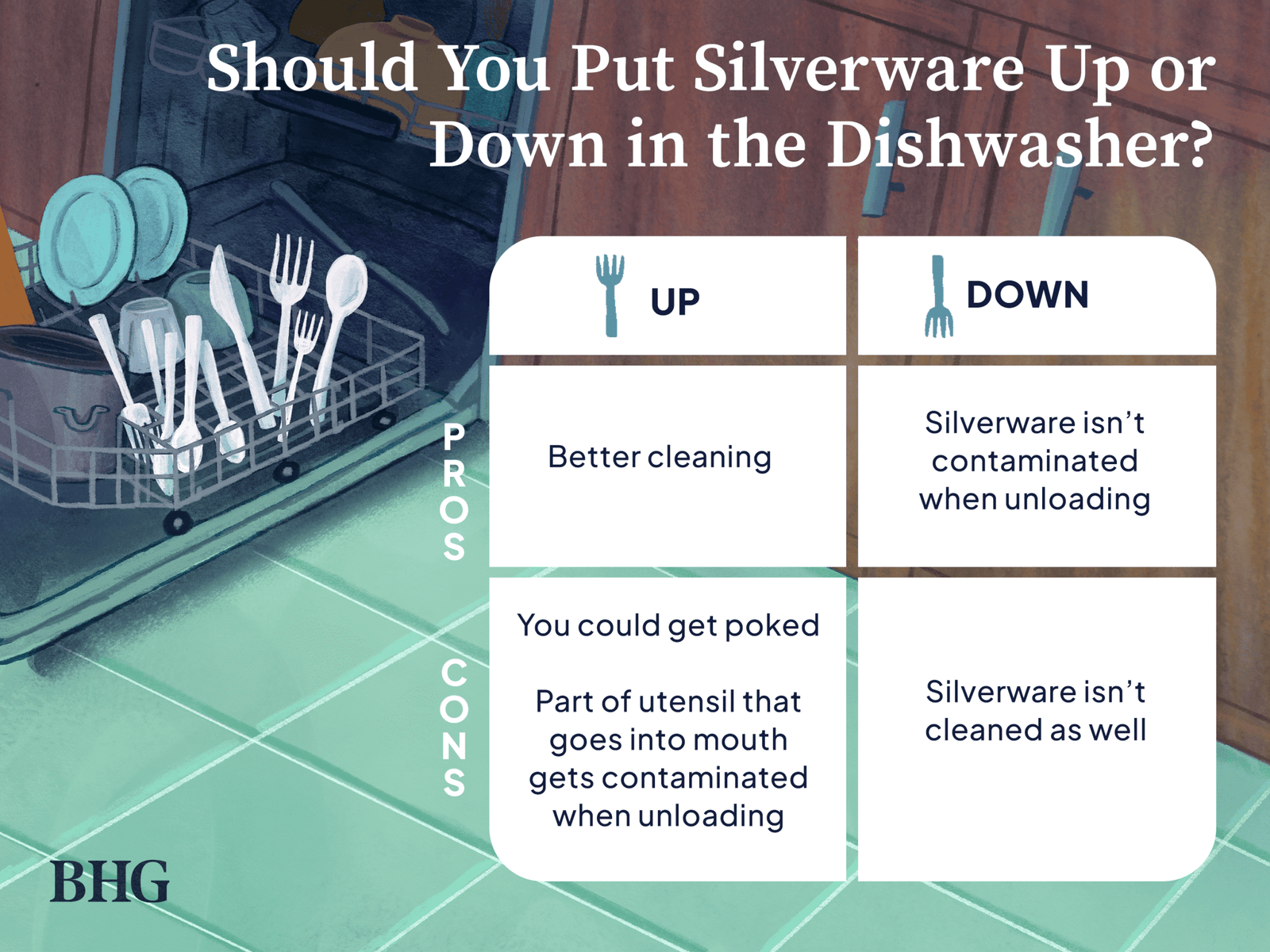

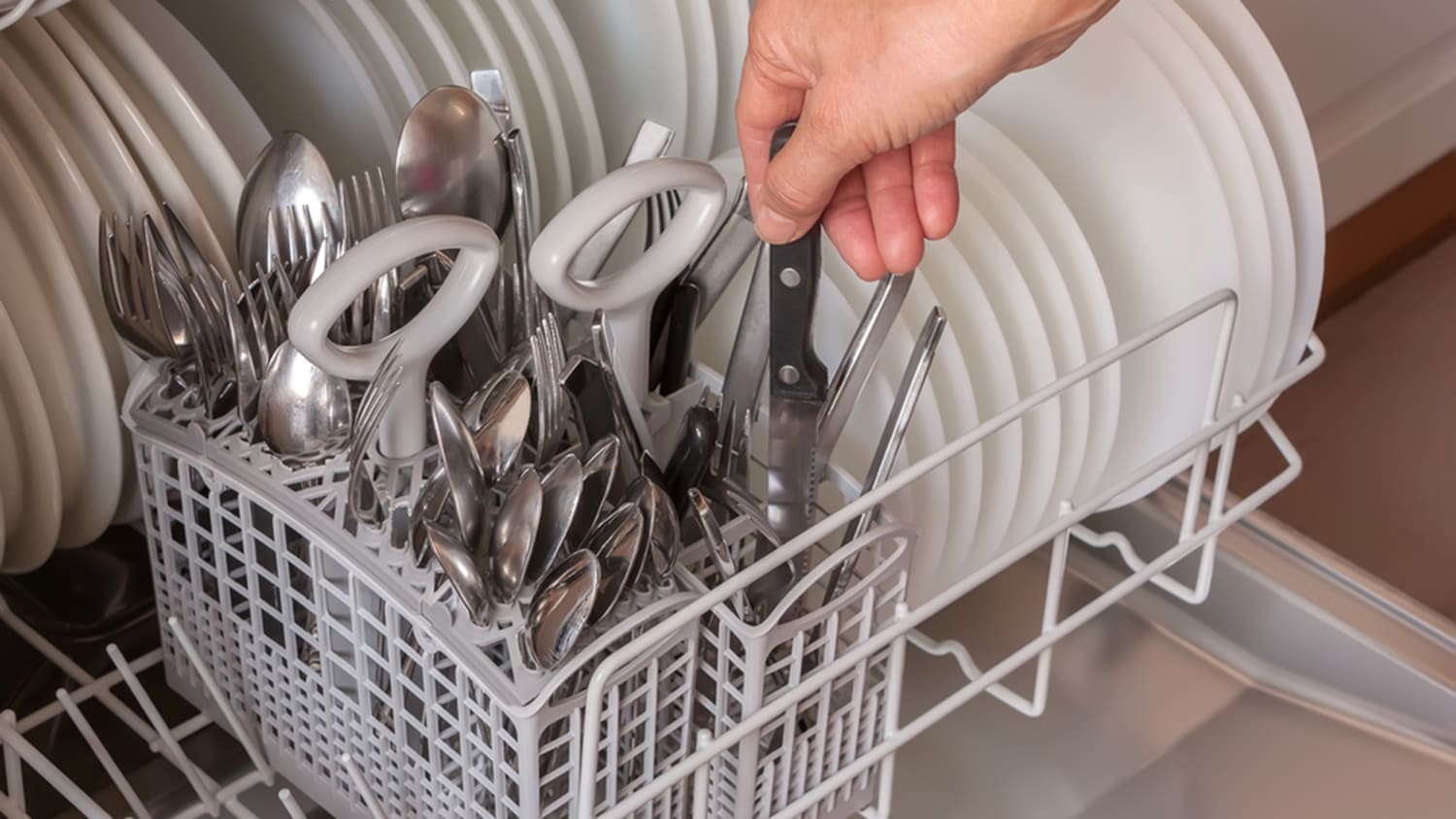
Place forks and spoons handles-down and knives handles-up for safety and best cleaning.
I’ve loaded hundreds of dishwashers in homes and kitchens, and I’ll walk you through exactly how to load silverware in a dishwasher so you get cleaner utensils, fewer dings, and safer unloading. This guide covers step-by-step loading, common mistakes, special-item care, and real-world tips from my own kitchen tests to help you master the task quickly.
:max_bytes(150000):strip_icc()/Simply-Recipes-Utensils-In-Dishwasher-LEAD-01-4e42014ff003428fa27c64d789c28459.jpeg)
Why correct loading matters
Loading silverware the right way improves cleaning. It keeps pieces from nesting. It prevents scratches and reduces rust risks.
How you load silverware in a dishwasher affects spray coverage. Nesting spoons trap food and block water. Knives placed wrong can dull or cause injury.
Using the right pattern and spacing uses less re-washing. It also helps detergent reach every surface. That saves time and energy over weeks and months.
:max_bytes(150000):strip_icc()/GettyImages-172148339-2000-737ebc6bca884bb08796852114e583bf.jpg)
Step-by-step guide to how to load silverware in a dishwasher
- Empty large scraps first. Remove big bits of food so spray arms don’t clog.
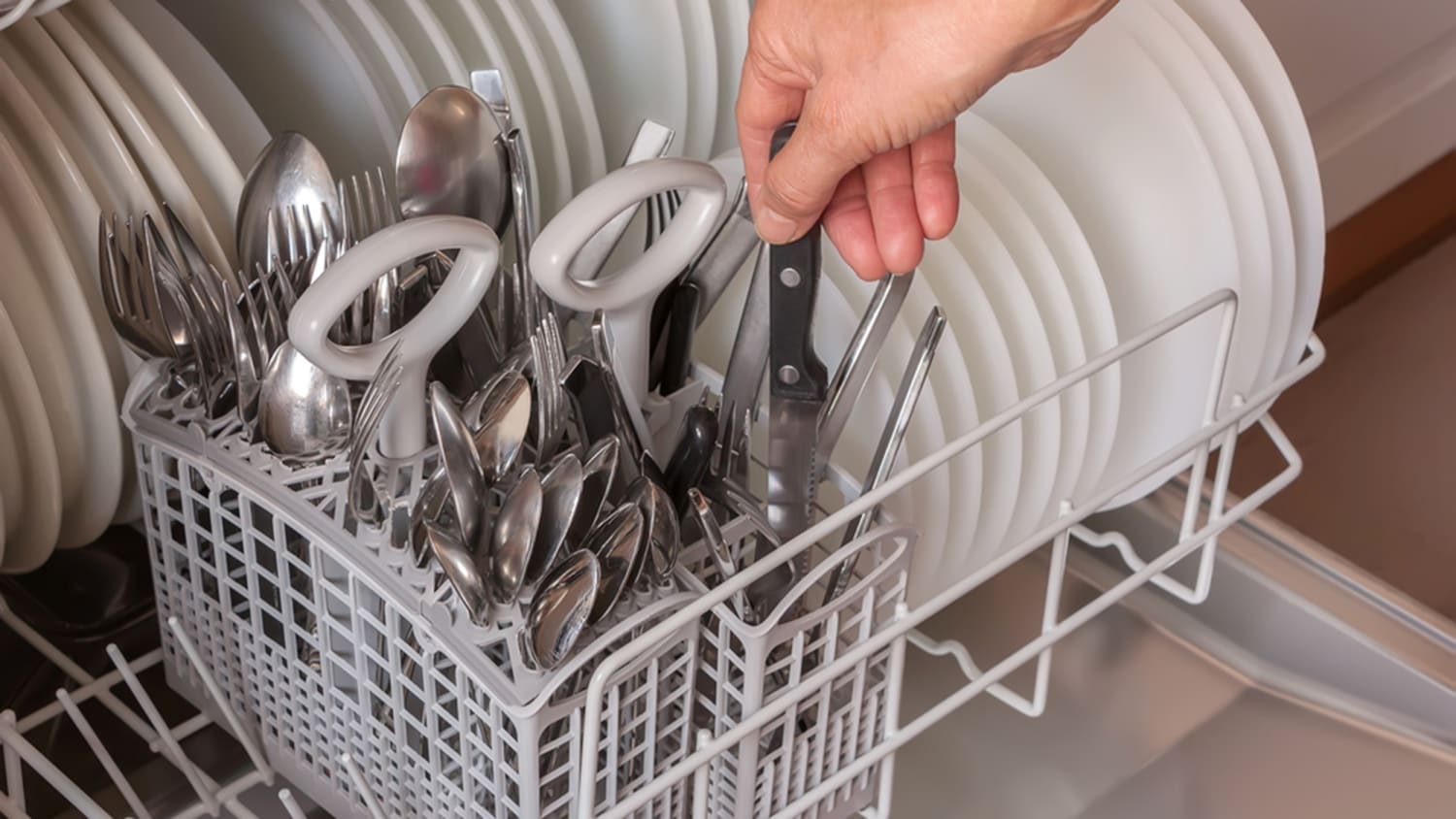
- Separate by type. Place forks together, spoons together, and knives together for easier unloading.
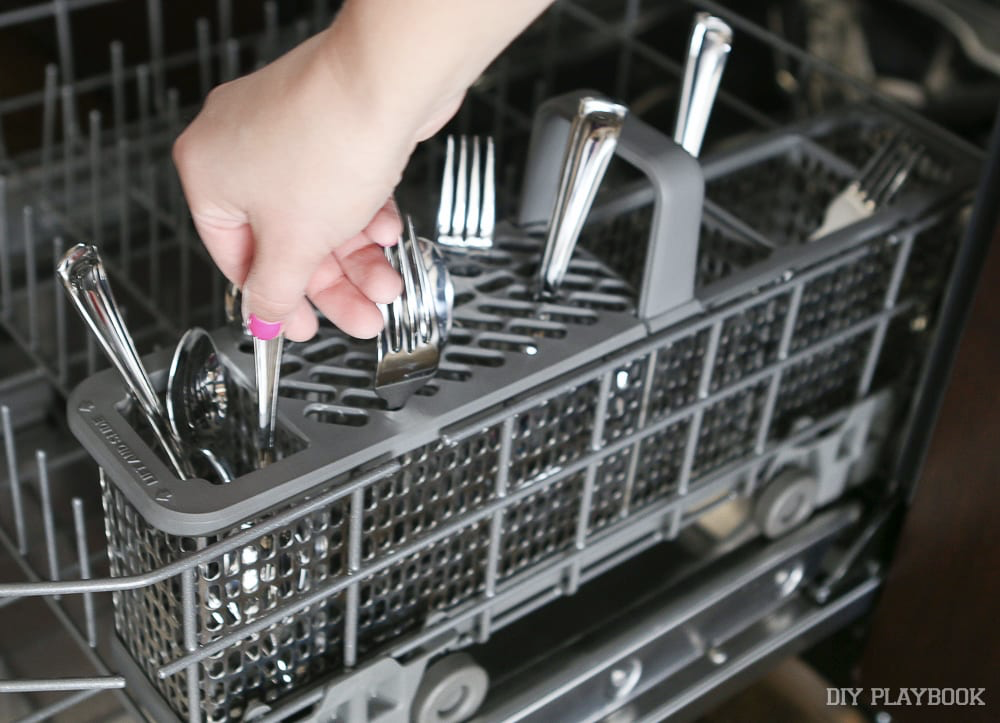
- Place handles down for forks and spoons. This exposes the eating surfaces to spray and reduces nesting.
- Place knives handles-up for safety. Point blades down to avoid cuts when unloading.
- Alternate spoon directions in the same row. This prevents spoons from nesting.
- Do not cram the basket. Leave space so water and detergent reach each piece.
- Use compartments if your dishwasher has them. Put small items in mesh carriers or dedicated baskets.
- Keep long utensils flat on the top rack if your model allows. Avoid them sticking through racks and blocking spray.
- Load a mix of metals separately when possible. Keep silver-plated items away from stainless if they might react.
- Run full loads when practical. This saves water and energy, but don’t overload just to save a cycle.
How to load silverware in a dishwasher properly takes a minute more but improves results every wash.
Quick PAA-style questions
Why do some silverware come out dirty?
Spoons and forks that nest block water and trap food. Spacing and alternating directions usually fix this.
Should I rinse before loading?
Light scraping is enough in most modern dishwashers. Heavy encrustation may still need a short rinse.
Common mistakes when learning how to load silverware in a dishwasher
• Overloading the basket and cramming pieces together. This blocks spray and leaves food behind.
• Letting spoons nest in the same direction. Nesting traps food and prevents cleaning.
• Placing all knives handles-down. This raises the risk of cutting yourself while unloading.
• Mixing reactive metals with silver-plated flatware. This can cause tarnish or discoloration.
• Ignoring the dishwasher’s manual layout instructions. Manufacturers often offer model-specific tips.
:strip_icc()/silverwaredirection_v1-7ca82e8f467049a6953b9fc9b4879dfd.png)
Special items and exceptions for how to load silverware in a dishwasher
• Knives with wooden or bone handles. Place these in the top rack or hand-wash to protect the handle.
• Sharp chef knives. Hand-wash when possible to preserve the edge and avoid damage.
• Silver-plated items. Wash separately from stainless to avoid chemical reactions and spotting.
• Plastic-handled forks or spoons. Use the top rack if the heat can warp the plastic.
• Delicate or antique pieces. Hand-wash these to protect finishes and solder joints.
How to load silverware in a dishwasher must account for special materials. When in doubt, choose gentle handling.
Dishwasher maintenance to improve silverware cleaning
• Clean filters and check spray arms regularly. Clear holes let water flow evenly.
• Run a monthly cleaning cycle with dishwasher cleaner. This reduces grease and mineral build-up.
• Check water temperature. Industry guidance suggests around 120°F for effective cleaning without damage.
• Use a rinse aid to reduce spotting and speed drying. This helps silverware come out cleaner and drier.
• Inspect baskets for broken tines or clips. Damaged racks can trap or scratch utensils.
Keeping the machine in good shape makes how to load silverware in a dishwasher more effective every time.
:strip_icc()/GettyImages-2190674821-92b296c1f62c4265ad46a132048d8f0e.jpg)
My personal tips and real-life lessons on how to load silverware in a dishwasher
I once loaded every utensil the same way to save time and ended up with nested spoons and re-washes. After experimenting, alternating spoon direction fixed the issue. I now use a mesh bag for tiny items like corn holders and chopstick tips.
I learned to keep knives blade-down in a separate compartment when available. That change cut kitchen cuts during unloading. If you host often, label zones in your basket for faster loading and unloading.
Small habits save time. Rinse only when necessary. Clean the filter monthly. These steps made my dishwasher more reliable and dishes cleaner.

Practical examples and loading patterns
Example 1: Family dinner with lots of forks and spoons
- Load forks in one row handles-down.
- Alternate spoon directions in the next row.
- Put knives handles-up in a separate section for safety.
Example 2: Mixed load with long utensils and small parts
- Lay spatulas flat on top rack.
- Place small lids and measuring spoons in a mesh bag in the basket.
- Keep silverware spaced and mixed types separated.
How to load silverware in a dishwasher can change by load type. Use patterns like these for best results.
:strip_icc()/bhg-how-to-load-a-dishwasher-hero_preview-109195fdd07c4d138bdbe363d8493bbd.jpg)
Frequently Asked Questions of how to load silverware in a dishwasher
Should forks face up or down in the dishwasher?
Forks generally face down so tines get direct spray and don’t trap food. Handles down also make unloading easier and safer.
Can I put knives in the dishwasher?
Yes, but place knives handle-up for safety and consider hand-washing high-carbon or fine chef knives to preserve the edge.
Do spoons go up or down in the dishwasher?
Alternate spoon directions to prevent nesting. If you must choose one, handles-down exposes the bowl to water better.
Do I need to rinse silverware before loading the dishwasher?
Light scraping is enough for most dishwashers. Heavy crusted food may need a quick rinse to avoid clogs and incomplete cleaning.
How do I stop silverware from rusting in the dishwasher?
Drying faster helps. Use rinse aid, ensure good airflow, and avoid prolonged exposure to salty or acidic food residue.
Conclusion
Mastering how to load silverware in a dishwasher improves cleaning, safety, and the life of your utensils. Use simple habits: separate types, alternate directions, protect special items, and keep the machine cleaned and tuned. Try the step-by-step patterns here for a week and notice cleaner silverware and fewer re-washes. Share your loading wins, ask a question below, or subscribe for more practical kitchen tips.