
How to Remove a Kitchen Sink Strainer — Step‑by‑Step Guide
Removing a kitchen sink strainer is a common, budget-friendly DIY job that solves clogs, leaks, odors, and lets you replace worn parts. This guide gives a clear step-by-step process, tool checklist, safety tips, and methods for stuck or corroded strainers so you can finish the job cleanly and avoid common mistakes.
Why remove the sink strainer (when and why)
- Clear deep clogs or remove trapped debris
- Replace cracked, corroded or leaking strainers and gaskets
- Reseal the drain flange to stop leaks and smells
- Access tailpiece and P‑trap for maintenance or garbage disposal installation
If the drain is slow, you smell sewer odors, or water leaks under the sink, removing the strainer to inspect and reseal is usually the right move.
Tools & materials (prepare before you start)
- Basin wrench (highly recommended), adjustable wrench, or channel-lock pliers
- Slip-joint pliers and/or locking pliers (vise grips)
- Screwdrivers (flat & Phillips)
- Penetrating oil (e.g., PB Blaster, WD‑40 Specialist)
- Putty knife, utility knife, or scraper
- Pipe wrench (for stubborn locknuts)
- Plumber’s putty or silicone sealant (choose by sink material)
- Replacement rubber gasket, washer, or new strainer (if needed)
- Bucket, rags, gloves, and eye protection
- Wire brush or old toothbrush and mild cleaner
- Flashlight or headlamp; strap wrench (for protecting finishes)
Safety & prep
- Place a bucket under the drain and clear out under‑sink clutter.
- Wear gloves and eye protection for rust, debris, and chemicals.
- Turn off under‑sink water valves only if you plan to disconnect water lines. Usually you do not need to shut off house water.
- Disconnect the P‑trap/tailpiece if it obstructs access.
- Inspect from underneath with a flashlight so you know what to expect.
Step‑by‑step: Remove a kitchen sink strainer
- Remove the sink stopper/basket from the top of the sink and clear the area.
- From under the sink, locate the locknut that secures the strainer body to the sink flange.
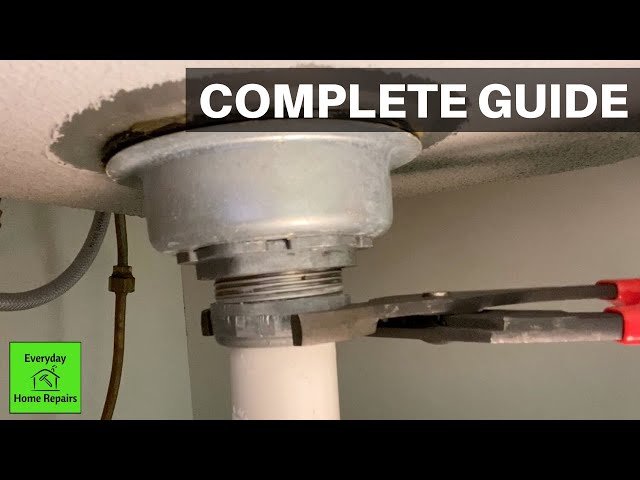
- Use channel‑locks, an adjustable wrench, or a basin wrench to loosen the locknut (turn counterclockwise).
- If the entire assembly spins, hold the strainer flange from the top with pliers or a strap wrench while turning the nut below.
- Unscrew and remove the locknut, washers, and gaskets. Watch for residual water — use the bucket/rag.
- Push the tailpiece upward and lift the strainer body/flange out from the top of the sink.
- Scrape away old plumber’s putty or sealant from the sink top with a putty knife or scraper.
- Clean the flange, strainer body, and sink opening with a wire brush and rag.
- Inspect rubber gaskets and metal washers; replace any brittle or damaged parts.
- If reinstalling, apply plumber’s putty (or recommended sealant) around the flange, set the strainer, hand‑tighten the locknut, then snug with a wrench. Reconnect the tailpiece and P‑trap and test for leaks.
Time: 20–40 minutes for a straightforward job; add extra time for stuck parts.
How to remove a stuck or corroded strainer (troubleshooting)
Work from least to most invasive:
- Penetrating oil: Spray locknut threads, wait 15–30 minutes, then try again.
- Extra leverage: Use a basin wrench, pipe wrench, or long channel‑locks.
- Prevent rotation: Hold the flange from the top with locking pliers or a strap wrench while you turn the nut.
- Break the seal: If flange and nut rotate together, tighten the locknut a quarter turn to break adhesive, then loosen.
- Heat for plastic: Run hot water over a plastic flange to soften putty/adhesive before trying.
- Cut the nut as last resort: Carefully cut a badly corroded metal locknut with a reciprocating saw or tube cutter. Protect sink finish and stop if there is risk of cutting into sink material.
- Remove assembly from above: If threads are completely seized, disconnect the tailpiece and P‑trap so you can work the assembly from the sink top.
Cleaning, inspection & reinstall tips
- Remove all old putty and debris to ensure a flat sealing surface.
- Replace rubber gaskets and paper/metal washers if they’re cracked or compressed.
- Use plumber’s putty on metal sinks. Use silicone (permanent) on porcelain, composite, or stone per manufacturer guidance.
- Hand‑tighten the locknut first, then snug with wrench. Avoid over‑tightening — that can warp the flange and cause leaks.
- After reconnecting plumbing, run water and check for leaks for several minutes. Re‑tighten slightly only if needed.
Signs you should replace the strainer
- Cracks, holes, or visible metal pitting
- Stripped or severely corroded threads
- Repeated leaks after resealing
- Basket/stopper no longer seats properly
- Excessive mineral buildup or damage to flange finish
Replacing a cheap strainer is often faster and cheaper than trying to repair badly corroded parts.
Common mistakes to avoid
- Over‑tightening the locknut (warps flange)
- Reusing hardened plumber’s putty or damaged gaskets
- Working without a bucket — expect spills
- Forcing a stuck nut without trying penetrating oil or a basin wrench first
- Forgetting to hold the flange from the top when turning the nut below
FAQ
Q: What tools make removing a sink strainer easiest?
A: Basin wrench and channel‑lock (or adjustable) pliers. Strap wrench protects sink finish; penetrating oil helps seized nuts.
Q: Do I need to shut off water?
A: No need to shut off the main supply for a simple strainer removal. Place a bucket and disconnect the P‑trap to avoid spills.
Q: How do I reseal the strainer?
A: Use plumber’s putty under the flange on metal sinks. Use silicone on porous surfaces such as porcelain, stone, or composite if recommended.
Q: Can I cut a stuck locknut off?
A: Yes, only as last resort. Protect the sink and stop if there’s any risk of cutting into the sink bowl itself.
Q: How long does the job take?
A: 20–40 minutes for normal removal and reinstall. Add time for stuck or corroded parts.